REVIEW · KRABI
Half Day Thai Cooking Class in Ao Nang, Krabi
Book on Viator →Operated by Oh-Hoo · Bookable on Viator
Thai cooking here is practical, not just showy. I like the hotel pickup and drop-off in the Ao Nang area, and I also like that this is a small-group class where you can actually ask questions while you cook.
One thing to keep in mind: some ingredients may be partly prepared, so your hands-on time could feel a touch lighter than the idea of cooking everything from absolute scratch.
In This Review
- Key Things I Think Are Worth Your Attention
- Ao Nang Pickup To Cooking School: How the 4 Hours Really Work
- The Classroom Experience: Local Instructor Energy + Real Thai Food Culture
- Thai Curry Paste: The Technique That Changes Everything
- The Dishes You’ll Cook in Ao Nang (Tom Yum, Pad Thai, Green Curry and More)
- Choosing Your Heat and Ingredients: Vegetarian, Vegan, and Spice Control
- Views, Setting, and the Bonus of Being Near Big Buddha
- What You Take Home: Recipe Book, Certificate, and the Best Way to Use Them
- Timing and Logistics: What to Know Before You Go
- Value Check: Is $37.48 for a Half Day a Good Deal
- Who This Cooking Class Suits Best (And Who Might Want Something Else)
- Should You Book This Ao Nang Half-Day Thai Cooking Class?
- FAQ
- How long is the cooking class in Ao Nang?
- Does the tour include hotel pickup and drop-off?
- What dishes are included in the course?
- Can I choose vegetarian or vegan options and control spice?
- How big is the class, and does it require a minimum number of people?
- What happens if it’s canceled due to weather?
Key Things I Think Are Worth Your Attention
- Hotel pickup/drop-off in Ao Nang keeps the schedule easy and low-stress
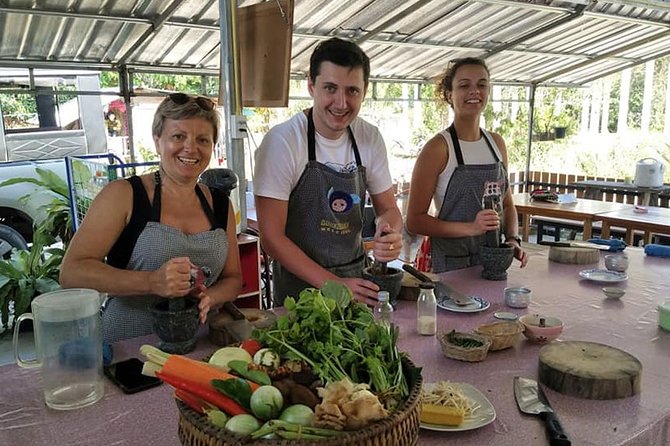
- Max 12 people means the instructor can stay on top of technique
- Curry paste with a mortar and pestle is the main skill you’ll take home
- Menu can be adjusted for vegetarian, vegan, and different spice levels
- Recipe book plus certificate gives your homemade cooking a proper blueprint
Ao Nang Pickup To Cooking School: How the 4 Hours Really Work
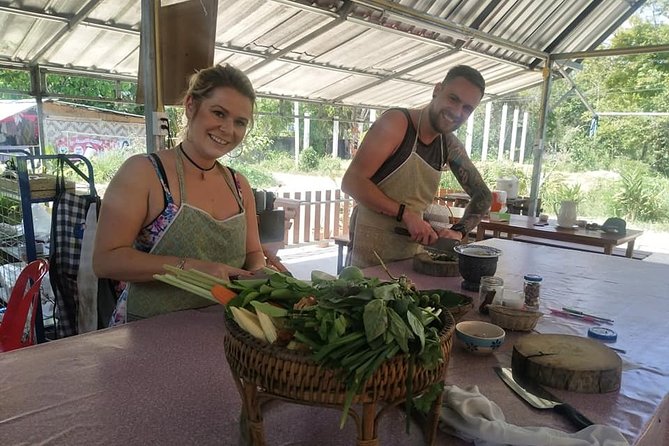
This is built as a true half-day reset for Ao Nang. Expect pickup roughly 30 to 40 minutes before your scheduled start time, then a transfer to the cooking school. The class runs about 4 hours total, and the rest of your day stays free for the beach, temples, or just wandering Ao Nang without rushing back.
Logistically, that pickup is the big win. If you’ve got limited time in Krabi, it’s the kind of activity that won’t eat your whole day. You also start with a mobile ticket, so you’re not juggling paper while you’re in transit.
One small detail: the activity ends back at the meeting point (the cooking school area). That matters because it shapes the day after. You can keep your plans flexible, especially if you’re pairing this with an afternoon boat tour or a slow sunset meal.
You can also read our reviews of more cooking classes in Krabi
The Classroom Experience: Local Instructor Energy + Real Thai Food Culture
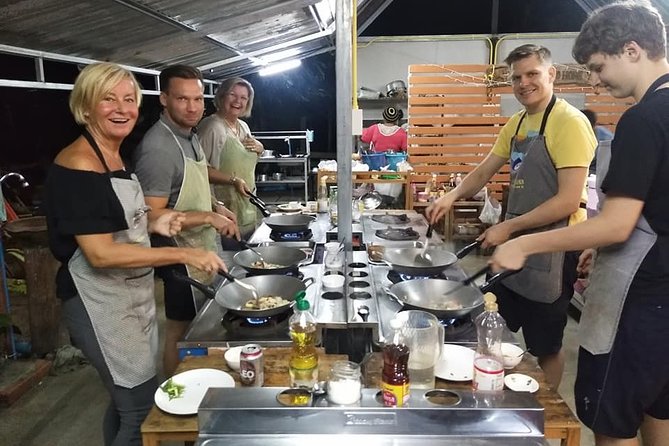
You don’t just chop vegetables and hope for the best. The flow is built around understanding the flavors behind Thai food: herbs, vegetables, spices, and how they work together.
A big part of what you’re paying for is the human factor. The instructor is positioned as a local expert, with a friendly, helpful teaching style. In practice, this means you’re more likely to remember what to do next time, because someone explains the logic behind each step, not only the step itself.
Also pay attention to how the class frames Thai eating. Thai food is deeply tied to daily life and tradition, and the course is designed to make you feel that context while you cook. You’ll get a short cultural walk-through alongside the cooking, which helps when you start making Thai dishes at home and notice the balance of sweet, sour, salty, and spicy.
Thai Curry Paste: The Technique That Changes Everything
Thai curry paste is the skill most people wish they’d learned earlier. In this class, you’re taught to make curry paste from scratch using a mortar and pestle, which is where the real flavor happens.
Even if you’re not planning to make curry paste every time at home, learning the method helps. You start to see what the paste is actually doing: building the base flavor before the coconut milk or broth shows up. That makes your future Thai cooking far less guesswork.
That said, here’s the one consideration I’d plan around. Some courses may have a few items already pre-set. If you’re the type who loves a fully hands-on start-to-finish process, you might find the pace slightly different than you imagined. The upside is that you still leave with the understanding needed to do it your way later.
The Dishes You’ll Cook in Ao Nang (Tom Yum, Pad Thai, Green Curry and More)
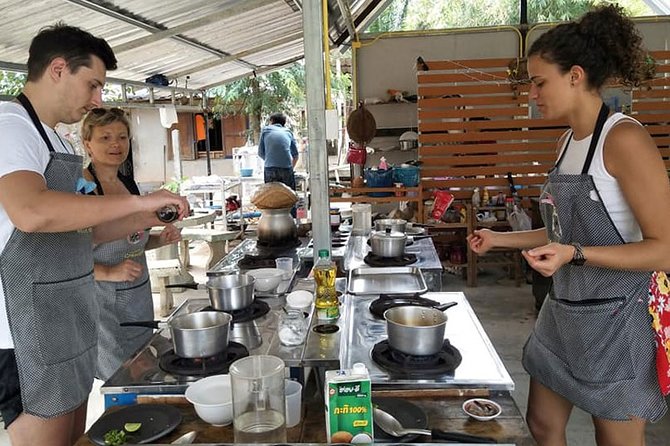
The course content centers on classic Thai dishes. There’s a 3-dish menu listed as Tom Yum, Pad Thai, and Green Curry. At the same time, the overall experience is described as teaching you to prepare multiple Thai dishes (and many people end up cooking a fuller set than just three).
So here’s the practical way to think about it: you should expect at least the core Thai hits, with the exact final mix depending on how the class is run. In real life, that often means you get a broader variety, so you can taste the range of Thai cooking rather than repeating one flavor profile all afternoon.
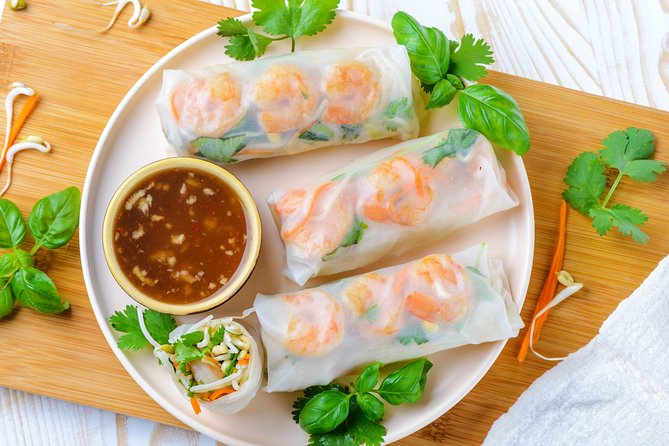
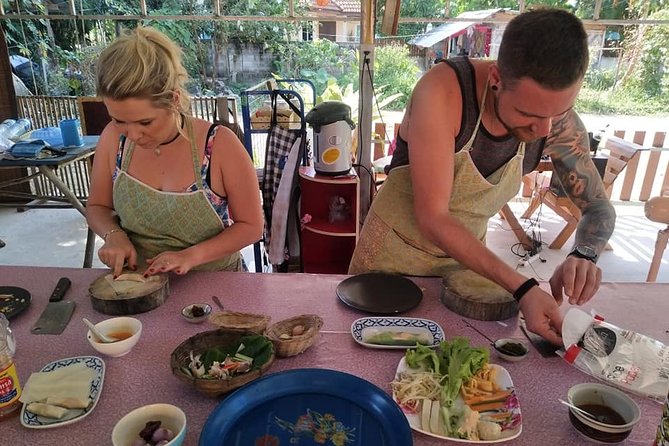
For each dish, you’ll be working through the steps that turn raw ingredients into something you can eat right away. You’re not just watching the instructor; you’re cooking, seasoning, and tasting as you go. That’s the point of a half-day class like this, and it’s also why it tends to feel worth the money.
One clever extra: you’re not forced to eat everything on the spot. You can take your food later, and there are examples of meals being packed for you.
Choosing Your Heat and Ingredients: Vegetarian, Vegan, and Spice Control
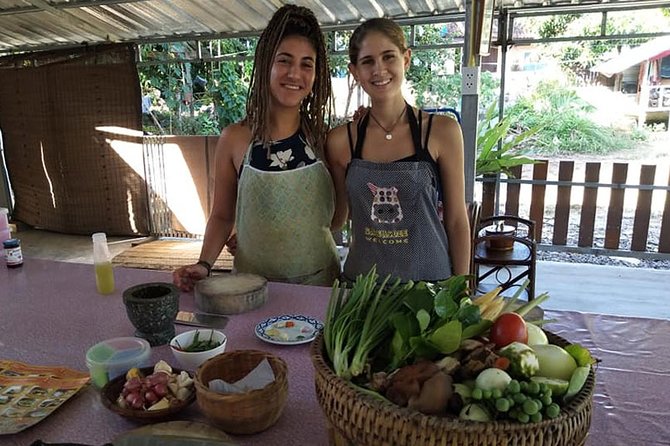
Thai food can be flexible, and this class is set up for it. You can have dishes adjusted to match what you like: vegetarian, vegan, spicy, or non-spicy options are supported.
This matters more than it sounds. Thai dishes often rely on specific ingredients for depth, so being able to swap or adjust without losing the overall balance is a real skill. If you’ve ever ordered Thai food and thought, I wish I could recreate this at home but without the usual ingredients, this class is designed to help.
If you’re vegan, it’s especially important to confirm that your instructor understands what you mean by vegan. The class format here is good at that kind of flexibility. You’ll also want to be clear about spice preferences early, since Thai heat can swing from mild to intense fast.
You can also read our reviews of more tours and experiences in Krabi




Views, Setting, and the Bonus of Being Near Big Buddha
There’s more to this than the stove. The cooking school setting is described as having a beautiful view, and it’s located near the Big Buddha area and a nearby temple. That doesn’t mean this turns into a sightseeing tour, but it does add a calm, scenic break to your afternoon in Ao Nang.
This is one of those small details that changes your mood. If the class is right near a temple area, you get a sense of place. You’re not stuck in a flat, windowless room with only cooking smells to keep you company.
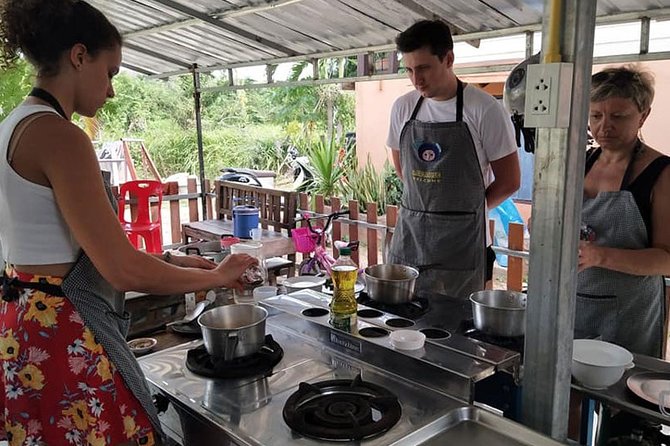
Also, the workshop itself is described as clean and well set up. That’s not glamorous, but it helps. A tidy kitchen and clear setup make the steps easier to follow, especially when you’re cooking several dishes in a half day.
What You Take Home: Recipe Book, Certificate, and the Best Way to Use Them
You get a lot more than a full belly. The class includes a free recipe book and a certificate for each course, plus tasting during the session and drinking water.
The recipe book is the real long-term value. The trick is to treat it like a tool, not a souvenir. During class, keep your notes simple: write down the order of steps and how the instructor describes flavor balance. Even if your notes are messy, you’ll thank yourself when you’re standing in your kitchen later staring at ingredients.
A certificate is nice for motivation too. It sounds silly, but having something you can point to helps you commit to trying the dishes again. The best part of these classes is when you can re-create what you learned and adjust it to your own spice tolerance.
Timing and Logistics: What to Know Before You Go
Let’s keep the logistics clear, because timing is everything with a half-day experience.
- Duration: about 4 hours
- Pickup timing: roughly 30 to 40 minutes before your start time
- Group size: max 12 people, and at least 2 people are required for the class to run
- Pickup areas: free pickup/drop-off in the Ao Nang area
- Extra transfer fees: if you need roundtrip transfer from Krabi Town, Klong Muang, or Tub Kaek, there’s an extra 200 THB per person with a minimum of 2 people
- Mobile ticket: yes, you can use it on your phone
- Diet customization: vegetarian and vegan options are supported, with spice level adjustments
If you’re staying outside Ao Nang, check whether your location falls into the free pickup zone. If it doesn’t, factor that transfer fee into your total.
Value Check: Is $37.48 for a Half Day a Good Deal
At $37.48 per person, this class can be a strong value in Krabi because you’re buying several things at once: instruction from a local chef, the cooking session itself, tasting and water, and take-home support (recipe book plus certificate).
The pickup and drop-off in Ao Nang also matters. Many food tours cost less on paper but make you scramble for transport. Here, you’re set up to spend most of the time learning and cooking, not negotiating rides.
You’re also not locked into paying for a “watch and eat” experience. You’re actively cooking multiple dishes, and the instruction is geared toward helping you replicate the dishes later. When you add that learning component to the included materials, the price starts to look reasonable.
For the budget-minded, the small-group setup is key. Max 12 people means better attention than crowded classes, and that translates into fewer “I don’t know what went wrong” moments later.
Who This Cooking Class Suits Best (And Who Might Want Something Else)
This fits you if you want a hands-on activity that’s still relaxed enough to leave your afternoon open. It also fits you if you’re the kind of person who likes to bring home a skill, not only photos.
You’ll probably love it if:
- You’re staying in Ao Nang and want easy hotel pickup
- You want to learn curry paste technique
- You care about eating something you helped make
- You need dietary flexibility (vegetarian or vegan, plus spice control)
You might want to manage expectations if:
- You want every single step to be fully scratch from the first minute with no pre-prep
- You’re hoping for deep language-heavy food history beyond the cooking basics
The good news is that even with those considerations, you still get the core result: you learn Thai cooking steps you can repeat.
Should You Book This Ao Nang Half-Day Thai Cooking Class?
Yes, if you want a half-day plan that’s both practical and memorable. The combination of hotel pickup, small group size, curry paste technique, and the included recipe book and certificate makes it a solid “learn-and-eat” experience without hogging your whole day.
If you’re a picky spice person or you’re cooking vegan/vegetarian, this class is also a good bet because menu adjustments are part of the setup.
If your idea of cooking classes is super hands-on from start to finish, message them ahead of time about what’s prepped versus what you’ll grind and chop yourself. That way, you’ll feel confident you’re getting the level of hands-on work you want.
FAQ
How long is the cooking class in Ao Nang?
The class runs for about 4 hours.
Does the tour include hotel pickup and drop-off?
Yes. Free pickup and drop-off are included for the Ao Nang area.
What dishes are included in the course?
A 3-dish course menu is listed as Tom Yum, Pad Thai, and Green Curry. The overall experience is described as having you prepare multiple Thai dishes.
Can I choose vegetarian or vegan options and control spice?
Yes. Dishes can be made vegetarian or vegan, and you can choose spicy or non-spicy to suit your taste.
How big is the class, and does it require a minimum number of people?
The class size is limited to a maximum of 12 people and requires at least 2 people to start.
What happens if it’s canceled due to weather?
The experience requires good weather. If it’s canceled due to poor weather, you’ll be offered a different date or a full refund.