REVIEW · KRABI
Thai Charm Cooking School Krabi
Book on Viator →Operated by Oh-Hoo · Bookable on Viator
Cooking Thai food in Krabi beats another generic tour. I like that you learn curry paste from scratch and eat what you make, not just watch. I also love the recipe book and certificate you get to take home. One thing to weigh: pick-up is included from Krabi Town and Ao Nang, but Klong Muang and Tub Kaek have an extra transfer charge.
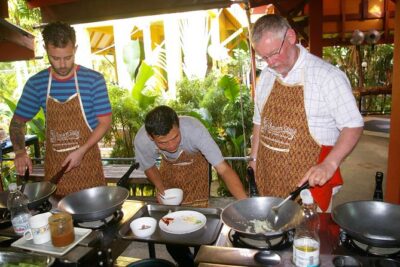
At Penny Thai Cookery School in Ao Nang, you’re taught by the chef-instructor (Penny’s energy shows up in the class vibe) with clear ingredient guidance and practical do’s and don’ts. The group stays small, so you’re not shouting over a crowd, and you can adjust the meal to your taste—vegetarian or meat, plus mild or spicy.
Plan around weather and timing, since the class runs in set sessions (morning/afternoon/dinner course options) and requires good conditions. If you want a stress-free half day with real food skills, this one fits.
In This Review
- Key points to know before you go
- Thai Charm Cooking School in Krabi: what you’re really signing up for
- Penny Thai Cookery School in Ao Nang: where the class happens
- The 4-hour experience: how the time gets used
- Start with soups and stir-fries, then build up to curry paste
- Soup choices
- Stir-fry choices
- Salads in Thailand aren’t side dishes
- The curry paste lesson: the skill that sticks
- Curry with chicken: taking paste to the finished dish
- Desserts: sticky rice with mango plus a coconut classic
- What you eat during the class (and why it’s not just fuel)
- Service style: friendly teaching, clear guidance, and do’s/don’ts
- Price and value in plain terms
- Who this Krabi cooking class suits best
- When it might not be your best choice
- After the class: Krabi Night Market convenience
- Practical tips so you get the most out of your cooking day
- Should you book Thai Charm Cooking School in Krabi?
- FAQ
- How long is the Thai cooking class in Krabi?
- Is hotel transfer included?
- Can I make the dishes vegetarian or vegan?
- Can I choose how spicy the food is?
- What do I get to take home?
- What if the class doesn’t run?
Key points to know before you go
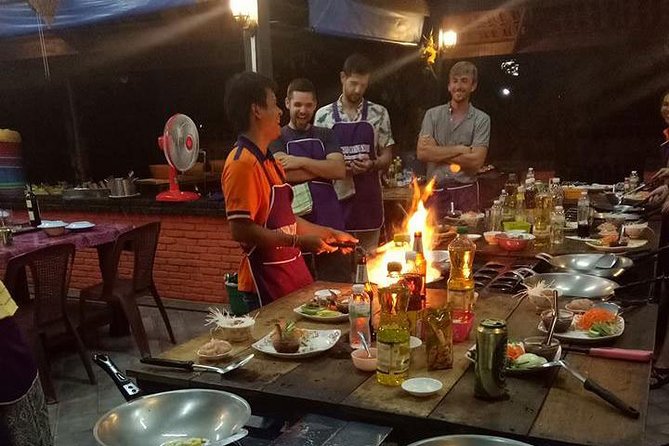
- Scratch curry paste work: you practice the components that make Thai curries taste like Thailand.
- Choice-driven menu: you can pick favorites across soup, stir-fry, salads, curry paste, and curry categories.
- Spice and diet flexibility: dishes can be vegetarian/vegan and adjusted spicy or non-spicy.
- Full meal included: breakfast, lunch, fruit, tastings, plus drinking water.
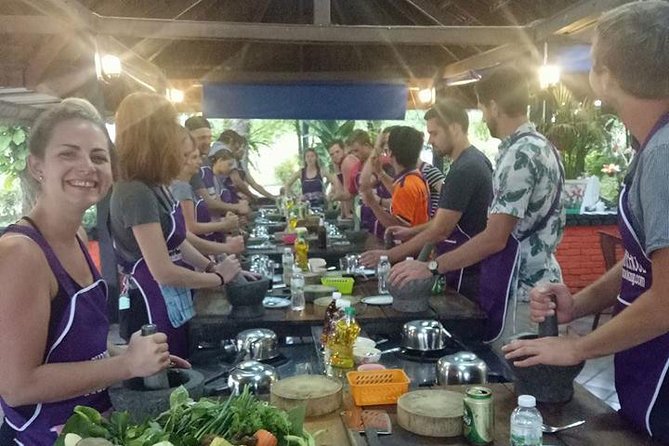
- Small-group feel: the class can run up to 25, while the activity booking cap is stated at 10.
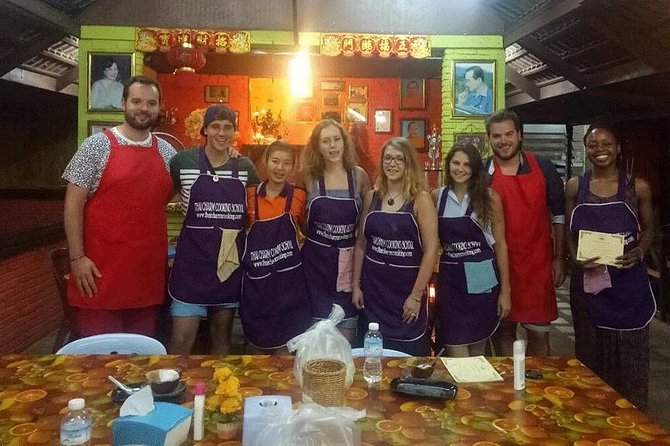
- Take-home proof: you receive a recipe book and a certificate.
Thai Charm Cooking School in Krabi: what you’re really signing up for
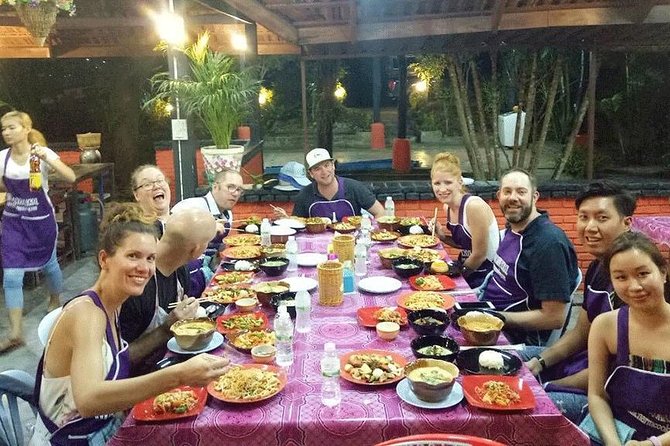
This is a Thai cooking class in Krabi that focuses on skills you can use again at home. The big promise isn’t just eating Thai food—it’s making key parts of a Thai meal, especially curry paste, from scratch.
You start with ingredients and seasonings, then you build dishes step-by-step. And yes, you’ll get to taste your own cooking. That matters, because Thai food is about balance—sweet, salty, sour, heat—and the class teaches you how to think that way, not just which spoon to use.
You can also read our reviews of more cooking classes in Krabi
Penny Thai Cookery School in Ao Nang: where the class happens
The class takes place at Penny Thai Cookery School in Ao Nang, on the outskirts of Krabi downtown. The meeting point is listed at 312 Soi Khlongiladpattana 1, Tambon Sai Thai, Amphoe Mueang Krabi, Chang Wat Krabi 81000.
If you’re staying in Ao Nang or Krabi Town, the setup is easy because round-trip transfer is included. If you’re farther out—Klong Muang or Tub Kaek—there’s an extra transfer charge of 800 THB per car. For many people, that’s the main logistical “gotcha,” so check your hotel location before you assume you’ll be picked up without cost.
The 4-hour experience: how the time gets used
The class runs about 4 hours. In practice, that’s a perfect length for a cooking session: long enough to learn real techniques, short enough that you don’t lose your whole day to kitchen time.
The school offers different course periods—morning, afternoon, and dinner course—so you can match it to your schedule. In any session, the menu structure covers a few core dish categories that show up again and again in Thai meals:
- soup options
- stir-fried dishes
- healthy salads
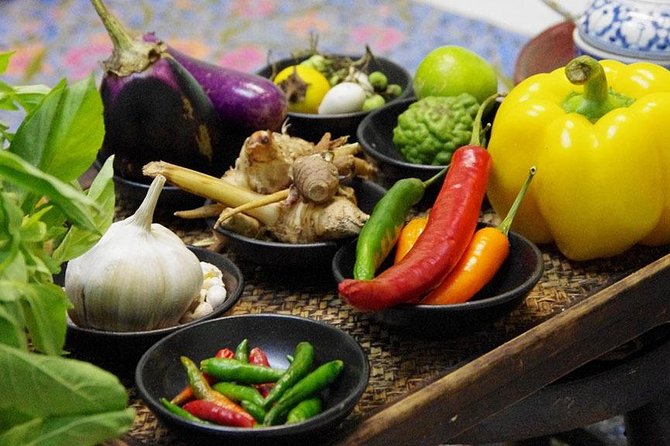
- curry paste (green/red/Phanang)
- curry with chicken (green/red/Phanang)
- two desserts
You choose your favorites from each category, which helps you tailor the class to your tastes.
Start with soups and stir-fries, then build up to curry paste
This is where the class gets useful for home cooking. You’re not just learning one dish; you’re learning the pieces that create the flavor backbone of Thai food.
Soup choices
You can pick from:
- Hot & Spicy Prawn Soup
- Chicken in Coconut Milk Soup
- Hot and sour soup
Soups are a great place to start because they teach how Thai seasoning builds in layers. Coconut milk curries and hot-and-sour styles also give you a quick sense of how Thai kitchens control richness vs. tang.






Stir-fry choices
You can choose:
- Pad Thai
- Chicken with cashew nuts
- Chicken with ginger
Stir-fry lessons matter if you want dinner that’s fast at home. The class experience helps you connect ingredients to the final taste, which is a lot more satisfying than following a recipe that feels random.
Salads in Thailand aren’t side dishes
One of the fun parts is that you don’t just make “a snack salad.” The healthy salad section includes Thai-style options like:
- Papaya salad
- Cucumber salad
- Green long bean
You’ll also have fruits and preparation of spicy Thai salads included. In Thai food, salads often carry punch—crunch plus heat plus citrusy sharpness. Learning salad technique is one of the quickest ways to level up your Thai cooking without needing fancy equipment.
The curry paste lesson: the skill that sticks
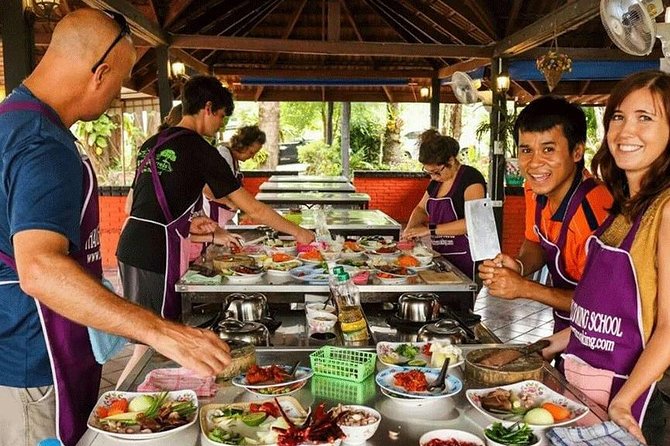
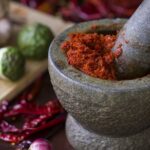
If you only do one thing in Thailand, do not skip the curry paste part. This class highlights learning curry paste from scratch, including:
- Green curry paste
- Red curry paste
- Phanang curry paste
That’s the big value. Curry paste is where most home cooks get stuck, because it’s not just spices—it’s the right combination in the right balance, plus texture.
You’ll learn why ingredients and seasonings matter, and you’ll get practical tips that help you choose quality ingredients. That’s important, because Thai curry paste is sensitive: if your aromatics are weak, the whole dish tastes flat.
Curry with chicken: taking paste to the finished dish
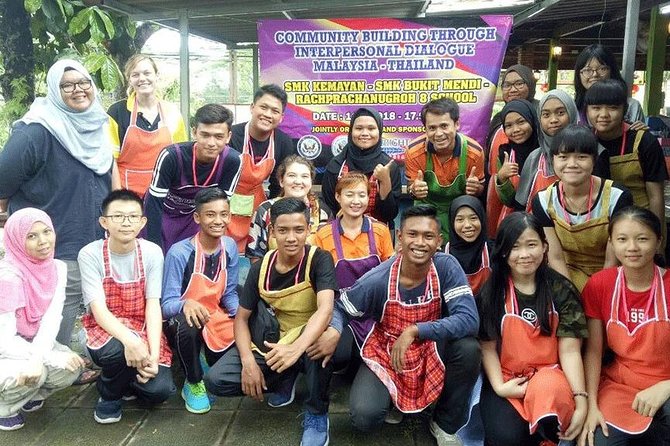
After curry paste, you move into the real payoff: curry with chicken, with options:
- Green curry
- Red curry
- Phanang curry
This is where you see how the paste performs. You learn how it transforms during cooking and how the final curry texture and flavor come together.
Also, the class is flexible: dishes can be made vegetarian/vegan and you can keep heat at a level that suits your taste. So if you’re cooking for a mixed group back home, you’ll have a practical way to adapt.
Desserts: sticky rice with mango plus a coconut classic
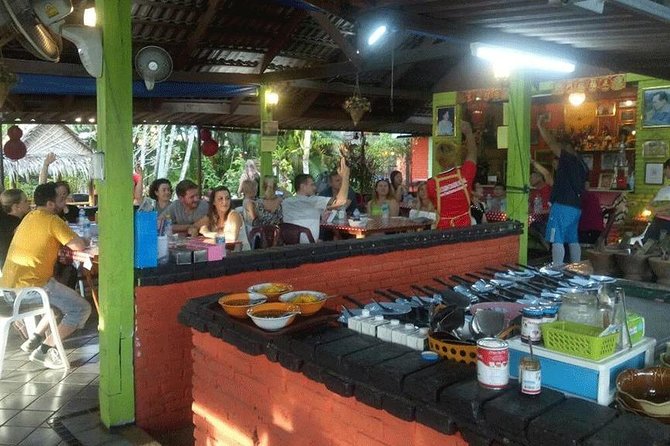
You also learn two desserts:
- Sticky rice with mango
- Banana in coconut milk
These aren’t afterthoughts. Thai desserts often use coconut milk, fruit, and starch in ways that feel simple once you understand the ratios. Having dessert included also keeps the class from feeling like a never-ending savory grind.
What you eat during the class (and why it’s not just fuel)
Meals are built in. The class includes breakfast and lunch, plus fruits, preparation of spicy Thai salads, food tasting, and drinking water. In other words, you’re not left hungry or scrambling for food right after.
And tastings matter. When you cook multiple dishes, it’s easy to lose your sense of whether something is “close enough.” Tasting as you go helps you connect what you did—texture, seasoning, balance—to how it should taste.
If you’re the type who likes to understand food rather than just consume it, this format gives you that satisfaction fast.
Service style: friendly teaching, clear guidance, and do’s/don’ts
From what you can expect on the ground, Penny’s teaching style focuses on friendly instruction with cooking expertise and clear explanations of ingredients and seasonings. Multiple people highlight that the class includes practical do’s and don’ts, and that Penny’s energy makes learning feel lighter.
That’s a real advantage if you’re not confident in the kitchen. You’re less likely to feel lost because the instruction keeps steering you back to technique and the “why” behind flavor choices.
Price and value in plain terms
The price is $46.87 per person for roughly 4 hours. That can look “high” if you compare it to eating out in Thailand. But it’s very reasonable when you account for what’s included.
You get:
- hotel transfers (from Krabi Town/Ao Nang)
- breakfast and lunch
- fruits and salad prep
- food tasting and drinking water
- recipe book for every course
- certificate
- cooking instruction for multiple dish categories
- the chance to learn curry paste from scratch
Also, the class size limits help keep it more hands-on. If you’re going to spend a half day in Krabi anyway, this turns that time into a skill you keep.
Who this Krabi cooking class suits best
This is a great match if:
- you love Thai food and want to recreate it at home
- you want hands-on lessons, not a passive food tour
- you’re traveling as a couple, with friends, or as a family group
- you have mixed diets in your group (vegetarian/vegan options are supported)
It’s also a good option if you’re a beginner. The class is described as welcoming for all cooking ability levels, and the teaching style is designed to get you moving rather than getting stuck.
When it might not be your best choice
I’d think twice if:
- you’re in Klong Muang or Tub Kaek and don’t want to add the 800 THB per car extra transfer cost
- you dislike spice and don’t want to spend any time preparing spicy components (though you can adjust dishes to be non-spicy)
- your schedule is so tight that a full 4-hour block plus transport could push you into rushing
After the class: Krabi Night Market convenience
If you want an easy next stop, you can be dropped off at Krabi Night Market after the cooking class. That’s useful because you’ll already be in the Ao Nang/Krabi Town flow of the day and can keep the evening going without planning another ride.
Practical tips so you get the most out of your cooking day
A few things that tend to make these classes more enjoyable:
- Go hungry. You’ll get breakfast and lunch, but you’ll also taste a lot as you cook.
- Tell your instructor your spice comfort level early, especially if you’re going for non-spicy.
- If you’re vegetarian or vegan, confirm the plan when you choose dishes from the categories.
- Take the recipe book home seriously. That’s the part you’ll use later when you’re standing in your own kitchen.
Also, since the class can run in a few periods (morning/afternoon/dinner), pick the session that fits your energy. Cooking on an empty stomach is fine, but cooking while you’re exhausted from a full travel day is harder than it should be.
Should you book Thai Charm Cooking School in Krabi?
Yes—if your main goal is learning Thai flavor, not just eating a meal in a pretty setting. The curry paste focus gives you a real skill, and the class structure covers the dishes most people miss when they try Thai cooking at home.
You should book this one if you:
- want a food-centered activity with hotel transfers and meals included
- like the idea of choosing dishes across soup, stir-fry, salads, curry paste, curry, and desserts
- want take-home value with a recipe book and certificate
I’d hold off only if transfer cost from your exact area matters to your budget, or if you can’t work with a 4-hour weather-dependent plan.
FAQ
How long is the Thai cooking class in Krabi?
It lasts about 4 hours.
Is hotel transfer included?
Round-trip transfer is included from Krabi Town and Ao Nang. If you need pickup from Klong Muang or Tub Kaek, there’s an extra transfer charge of 800 THB per car.
Can I make the dishes vegetarian or vegan?
Yes. All dishes can be adjusted to be vegetarian or vegan, as well as meat options.
Can I choose how spicy the food is?
Yes. Dishes can be made either spicy or non-spicy to suit your taste.
What do I get to take home?
You receive a recipe book and a certificate.
What if the class doesn’t run?
The experience requires good weather, and it also needs a minimum number of travelers to start. If it’s canceled for either reason, you’ll be offered a different date or a full refund.