REVIEW · AO NANG
Krabi: Ya’s Cookery Late Afternoon Thai Cooking Class
Book on GetYourGuide →Operated by Ya Thai Cookery School · Bookable on GetYourGuide
Dinner shouldn’t be the only plan in Krabi. This late-afternoon Thai cooking class at Ya’s Cookery School puts you to work in the kitchen, from fresh ingredients to homemade curry paste.
I especially like two things: first, the focus on making Thai flavors from scratch, including grinding herbs and spices in a stone mortar; second, the class ends with you eating the Thai specialties you worked on, not just watching and hoping. The one possible drawback is pace—some people feel it moves quickly, with less explanation than they expected.
In This Review
- Key Points You’ll Care About
- Why This Late-Afternoon Krabi Class Works So Well
- Getting To Ya’s Cookery School: Pickup, Shoes, and What to Bring
- The First Lesson: Fresh Ingredients and Thai Flavor Balance
- Curry Paste in a Stone Mortar: The Skill That Changes Everything
- Choosing Your Dishes: Green, Panang, Noodles, Papaya Salad, and More
- The Wok, the Pot, and the Plate: What You’ll Cook and Why It Matters
- Curries: Green and Panang
- Noodles and stir-fries
- Papaya salad and spicy salads
- The Best Part: Eating What You Made (and Sticky Mango Rice)
- Price and Value: Is $48 Worth It in Krabi?
- Who Should Book This Cooking Class (and Who Might Not)
- Should You Book Ya’s Cookery Late Afternoon Class?
- Quick checklist before you go
- FAQ
- How long is the Krabi late afternoon Thai cooking class?
- Where is pickup included?
- Can you do vegetarian options?
- What dishes can I choose to cook?
- What languages are used during the class?
- What should I bring and wear?
Key Points You’ll Care About
- Curry paste from scratch in a stone mortar (the core skill behind Thai cooking)
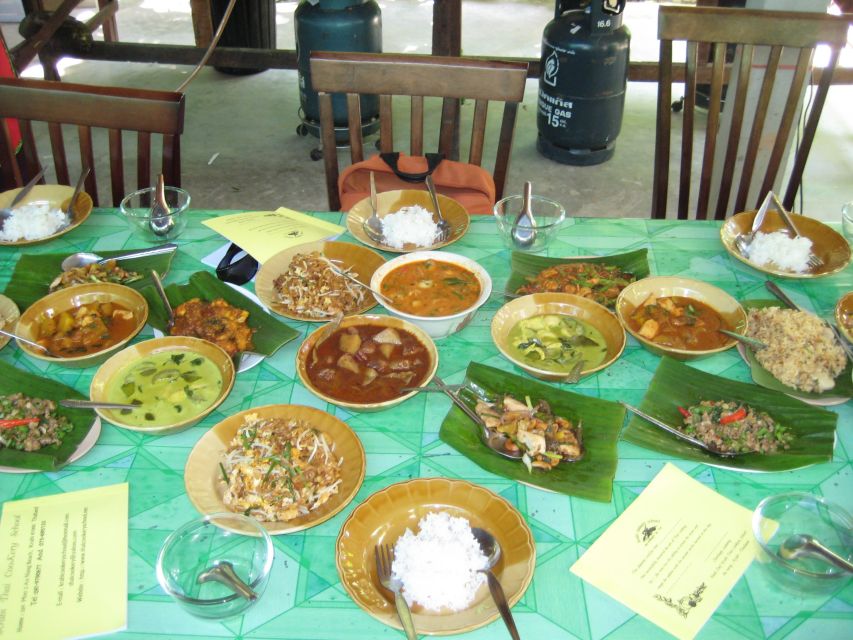
- Choose your dishes from a set menu like green curry, panang curry, noodles, and papaya salad
- English recipes and instruction plus a cook book style set of materials
- Round-trip pickup included from Ao Nang and Ao Nam Mao
- All dishes can be adapted for taste or vegetarian preferences
- A lot of food at the end, including sticky mango rice made for the group
Why This Late-Afternoon Krabi Class Works So Well
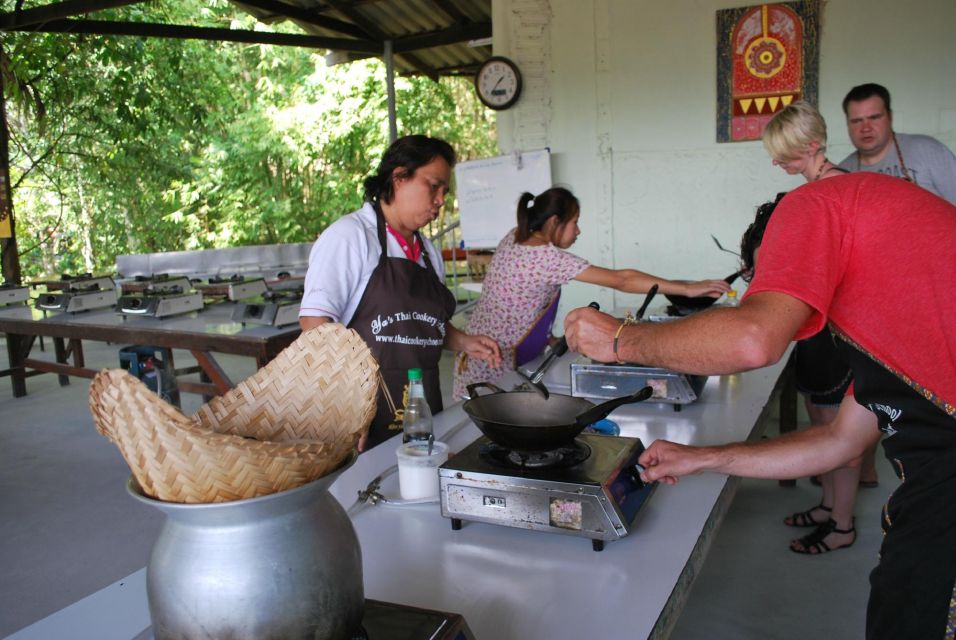
Late afternoon is a smart time to do a cooking class in Krabi. The heat eases off, and you’re not fighting the day’s crowds or trying to squeeze it between beach plans. You get a calm runway into evening, then finish with a full meal in hand.
This class also has a useful rhythm. You start with ingredients, you learn the building blocks (spices, herbs, and the balancing act), and then you cook complete dishes using those pieces. That makes the skills feel practical, not just like a fun workshop.
And because it’s focused on real Thai favorites—curry, fried noodles, papaya salad, stir-fries—you’re not leaving with a vague souvenir. You’re leaving with a menu you can actually recreate.
You can also read our reviews of more cooking classes in Ao Nang


Getting To Ya’s Cookery School: Pickup, Shoes, and What to Bring
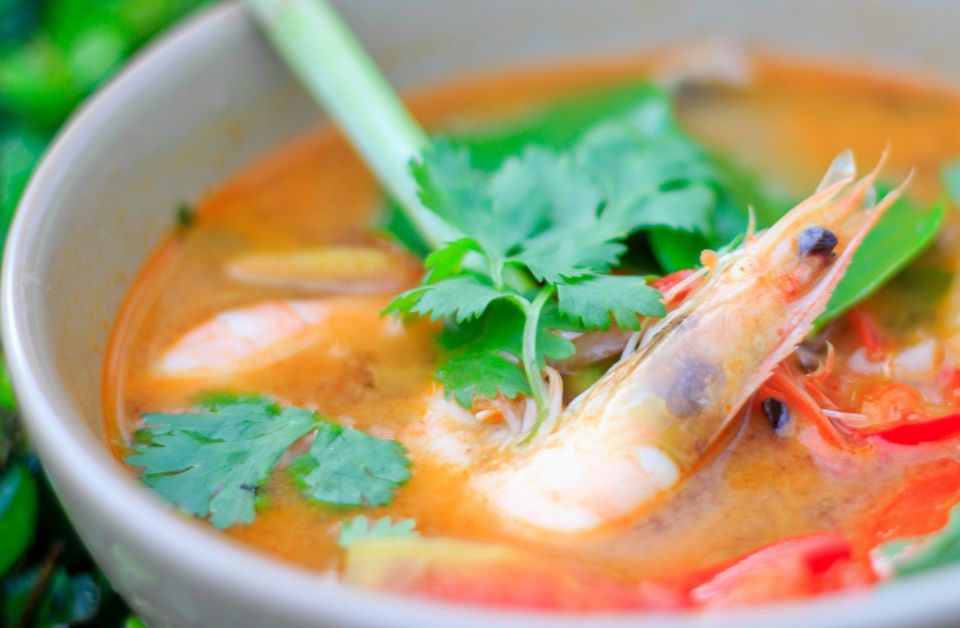
Ya’s Cookery School runs a hotel round-trip transfer from Ao Nang and Ao Nam Mao. That’s a big deal here. In Krabi, getting around can be its own mini-project, so having pickup built in means you spend your energy cooking instead of negotiating transport.
If your hotel is in other areas, transfers are available as add-ons. Klong Muang is 250 THB per person, Tubkaek Beach is 300 THB per person, and Krabi Town is 250 THB per person. Those add-on transfers have a min 2 and max 6 people limit, and you pay directly to the staff on the day of class.
On arrival day, plan for comfort and practicality:
- Wear closed-toe shoes (you’ll be in a working kitchen area).
- Avoid luggage or large bags. The class doesn’t allow them, so pack light for a smooth start.
If you’re hoping to bring extra gear or a big backpack, this isn’t that kind of activity. Think of it more like a cooking station session than a sightseeing excursion.
The First Lesson: Fresh Ingredients and Thai Flavor Balance
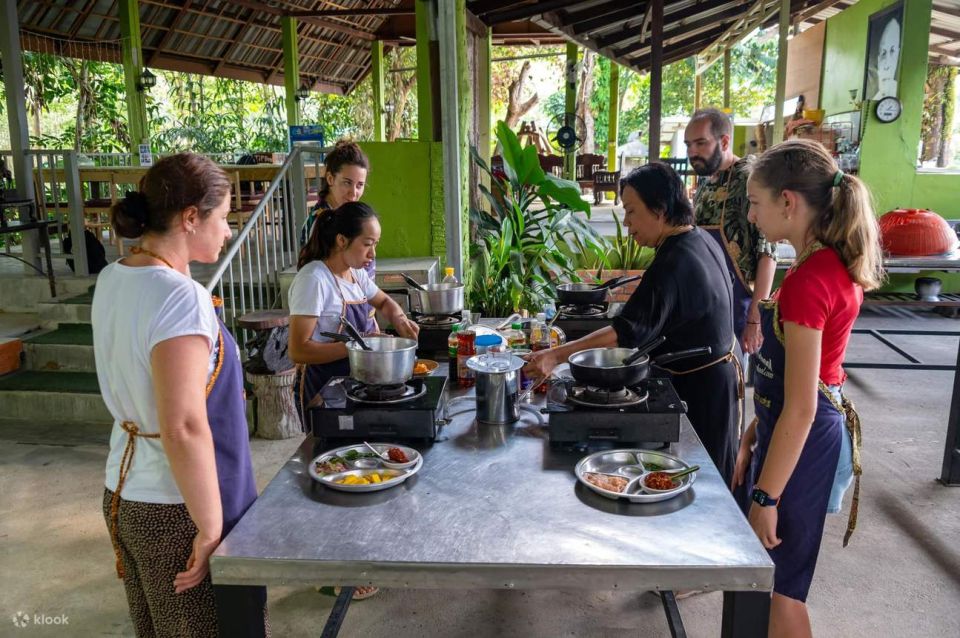
Before you ever fire up the wok, you start with ingredients. That matters, because Thai cooking is built on freshness and balance. You’ll be shown how to choose what’s worth using and why—especially when it comes to produce and the herbs and spices that give Thai dishes their identity.
This class is also very much about the “why,” not only the “how.” You’ll learn how Thai recipes balance flavors—sweet, salty, sour, heat—so the dish tastes right even when you’re cooking outside Thailand. You’ll combine fragrant spices and fresh produce, then learn the techniques to turn that pile of ingredients into a finished plate.
The kitchen training uses traditional tools and methods. You’re working in a style that makes the results make sense: you can taste the difference that comes from the right approach, not from guessing.
Curry Paste in a Stone Mortar: The Skill That Changes Everything
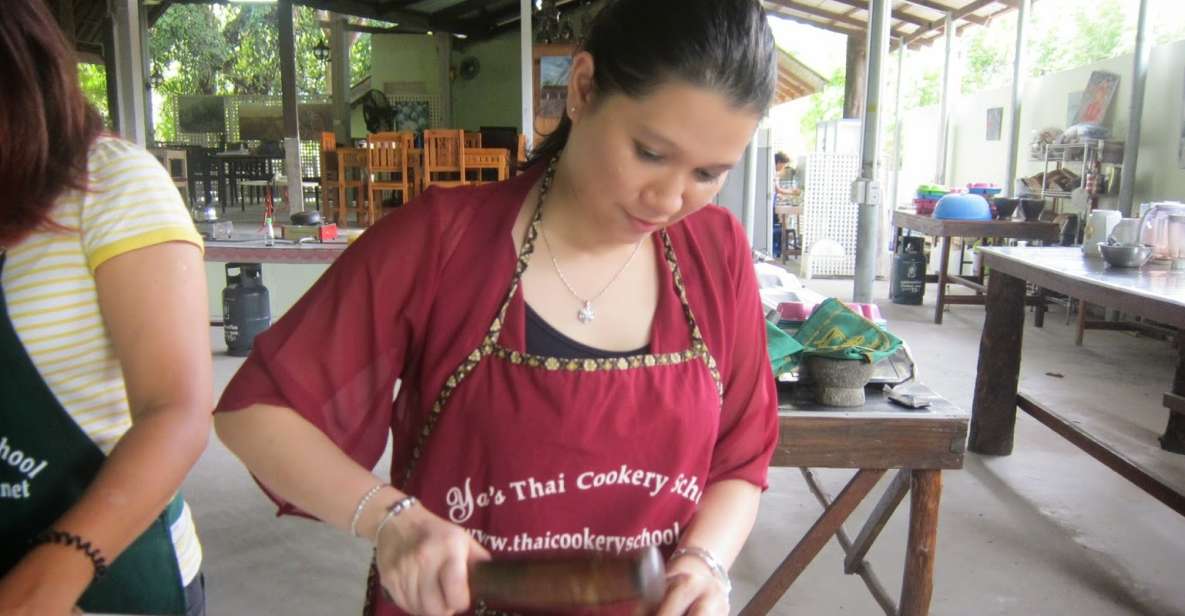
If you’ve ever tried to cook Thai curry at home and wondered why it tastes different, this is where the class pulls its weight. Making curry paste is presented as the unique and important part of Thai cooking. And here, you’ll do the work rather than just watch someone else do it.
You’ll grind herbs and spices together using a stone mortar. That process isn’t just traditional for show. It helps you combine flavors into a paste base that cooks into the dish’s backbone—aroma first, then depth, then heat.
From there, the class moves you into complete curry dishes. You’re not just learning a paste recipe in isolation. You learn how paste becomes curry, how it behaves in the pot, and what you should be mindful of as it cooks.
This is also where you’ll get the most value if you care about food that tastes like Thailand, not like a generic curry powder version.
Choosing Your Dishes: Green, Panang, Noodles, Papaya Salad, and More

You pick from a list of dishes. The specific set includes curry pastes and options like green curry and panang curry, plus favorites such as fried noodles and papaya salad. Other options include chicken in coconut milk and stir-fried chicken with holy basil, as well as stir-fried morning glory.
In other words, you’re not stuck with one single menu. The structure lets you tailor your experience to what you actually want to eat. If you’re a curry person, lean into curry. If you prefer something lighter and spicy-sour, choose papaya salad.
A key detail: dishes can be adapted to taste or made vegetarian. So if you avoid meat or prefer plant-forward cooking, you can still get a full plate of your own cooking without feeling like you’re doing the class “wrong.”
One more practical note: don’t over-plan your expectations about selecting a custom recipe style. The class offers enough variety that you still end up cooking multiple dishes, and there’s also a group element at the end (more on that next).
You can also read our reviews of more tours and experiences in Ao Nang

The Wok, the Pot, and the Plate: What You’ll Cook and Why It Matters
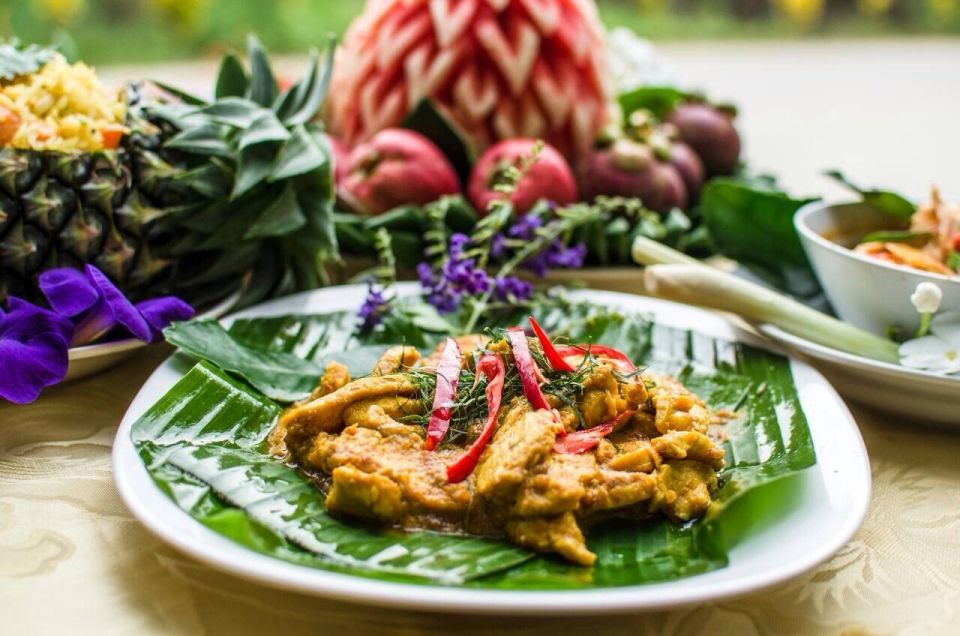
This isn’t a class where you only do one dish well. It’s built around producing a full Thai meal experience, with multiple dishes from scratch. That gives you a chance to learn different cooking techniques and how Thai cooking changes with each one.
Curries: Green and Panang
Green curry and panang curry each teach a different side of curry behavior. You’ll learn how the paste base translates into aroma, body, and flavor balance once heated and cooked. You’ll also get a feel for how to adjust to your taste as the dish comes together.
Noodles and stir-fries
Fried noodle Thai style and stir-fried dishes teach speed and control. With Thai stir-frying, timing is everything: you want heat and movement, not steaming. You’ll learn how Thai flavors hold up when cooked fast and how sauces and aromatics cling to noodles or greens.
Papaya salad and spicy salads
Papaya salad is a classic reason people sign up for Thai cooking classes. You’ll work with preparation that includes spicy salad fruit components, and you’ll learn how balance works when sour, sweet, salty, and heat are all active at the same time.
Across all dishes, the point is consistent: you’ll cook with the right techniques, then you’ll taste how Thai flavor balance should land. That’s what you can repeat later at home.
The Best Part: Eating What You Made (and Sticky Mango Rice)
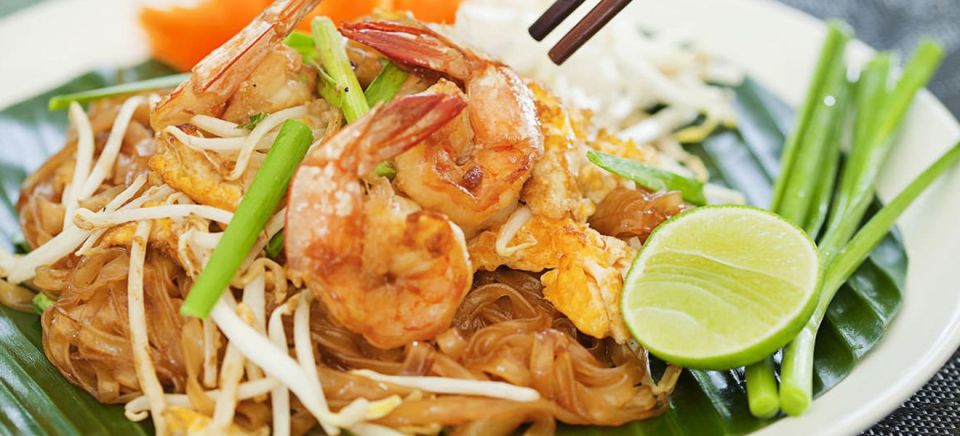
The class ends with you enjoying the Thai specialties you’ve spent the afternoon making. That’s not a small perk. Cooking classes can become “work with no payoff.” This one has payoff built in.
You should expect a satisfying amount of food. One reason is that the class is designed around producing multiple dishes, and you’ll finish by eating what you made as a group. People highlight that the end of the class delivers heaps of food and that it’s all delicious.
There’s also an extra group favorite: sticky mango rice prepared for everyone by the teacher. Even if you’re focused on savory dishes, this dessert-style finish is a great closer.
If you’re worried about leaving hungry, don’t. You’re not just sampling. You’re taking home a meal experience that feels complete.
Price and Value: Is $48 Worth It in Krabi?
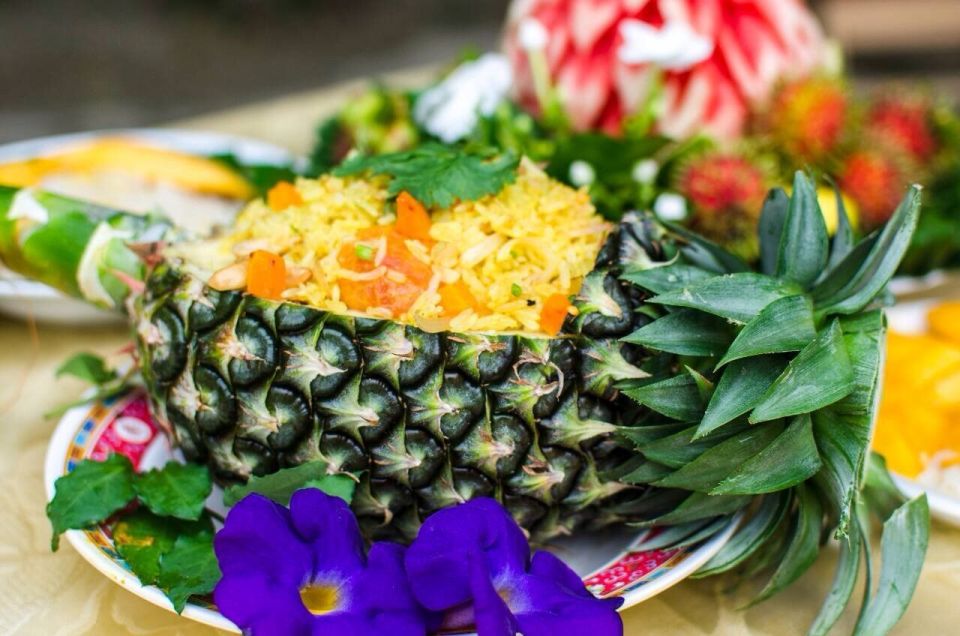
At $48 per person, this class is priced like a serious hands-on activity, not a casual demo. The value depends on what you’d otherwise pay for similar food experiences plus guided instruction.
Here’s what you’re getting for the money:
- 3.5 hours of instruction and cooking time
- Ingredients and recipe materials, plus instruction in English
- Food and water during the class
- Fruits and preparation of spicy Thai salads
- Pickup included from Ao Nang and Ao Nam Mao
That pickup detail is often the hidden value. If you need to taxi or arrange rides yourself, it adds cost and friction. Having it included makes the $48 feel more grounded, especially for a mid-range activity.
Transfers from other areas are extra, but they’re clearly priced as add-ons. If you’re outside Ao Nang or Ao Nam Mao, check your hotel location before you decide.
Also consider skill value. The class trains you in core Thai cooking mechanics—especially curry paste and flavor balancing. That’s the kind of learning you can reuse later. One-time meals don’t teach you much. This does.
Who Should Book This Cooking Class (and Who Might Not)
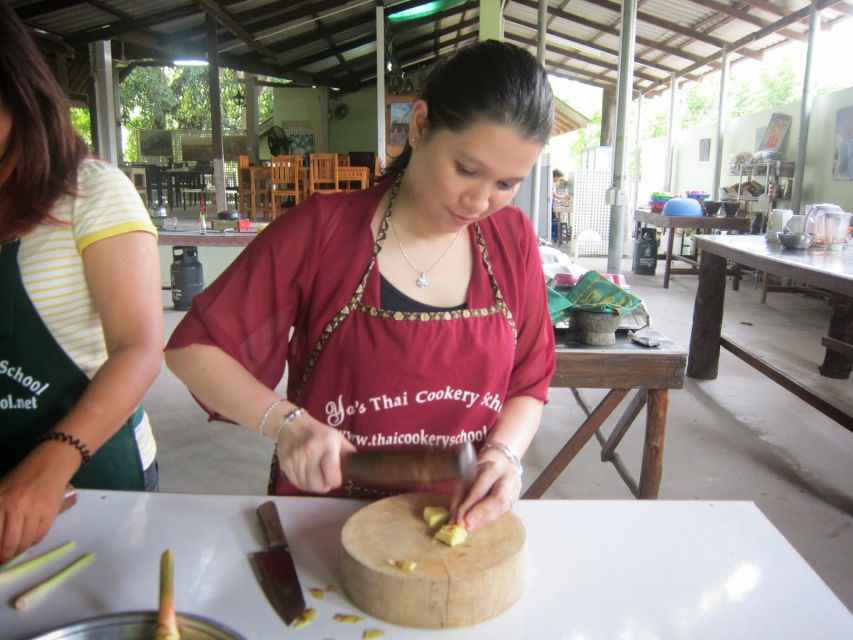
This class is a strong match if you want a practical Thai cooking experience that results in a real meal. It’s also a good fit if you like the idea of learning foundational techniques, not just following a single recipe.
You’ll likely enjoy it most if:
- you like curry, Thai salads, and wok cooking
- you want English instruction and recipe materials to take home
- you don’t mind a kitchen where you’re actively chopping, grinding, and cooking
- you want some flexibility with vegetarian adaptations
It may feel less ideal if you want very slow, step-by-step pacing with lots of extra explanation. The class can move quickly, and if you need deep pauses to ask every question, go in ready to learn by doing.
Also note: it’s not suitable for people with mobility impairments, and you should plan around the no-luggage, working-kitchen setup.
Should You Book Ya’s Cookery Late Afternoon Class?
If you want the highest chance of a “worth the money” day in Krabi, I’d book it. The combination of hands-on curry paste work, English materials, and finishing with the meal you cooked hits the sweet spot.
Book it especially if you’re staying near Ao Nang or Ao Nam Mao and you want pickup handled. That alone makes the logistics feel easier. And if you’re the type who loves bringing food skills home, curry paste and flavor balance are skills that pay off beyond this one afternoon.
If you’re very sensitive to pace or you prefer lots of slow narration, it’s still a good class—but you’ll want to go in with the expectation that you’ll learn by cooking, not by listening for long stretches.
Quick checklist before you go
- Closed-toe shoes
- Small bag only (no large luggage)
- Curiosity about curry paste and spice grinding
- Hunger, because you’ll finish with a full meal
FAQ
How long is the Krabi late afternoon Thai cooking class?
The class runs for 3.5 hours. Starting times vary, so you’ll need to check availability for the exact schedule.
Where is pickup included?
Pickup is included from hotels in Ao Nang and Ao Nam Mao. You’ll get the exact pickup time by email after booking.
Can you do vegetarian options?
Yes. The dishes can be adapted to taste or made vegetarian.
What dishes can I choose to cook?
You can choose 4 dishes from options that include green curry, panang curry, fried noodle Thai style, papaya salad, chicken in coconut milk, stir-fried chicken with holy basil, and stir-fried morning glory (plus curry paste options).
What languages are used during the class?
Instruction is provided in English and Thai.
What should I bring and wear?
Bring closed-toe shoes. Large bags or luggage are not allowed.
If you tell me your hotel area in Krabi (Ao Nang, Klong Muang, Tubkaek Beach, Krabi Town, or Ao Nam Mao), I can help you decide whether the included pickup is likely enough or if you should plan for the add-on transfer.