REVIEW · AO NANG
Krabi: Traditional Thai Cooking Class with Local Chef
Book on GetYourGuide →Operated by Smart Cook Krabi,Thailand · Bookable on GetYourGuide
Thai cooking hits different in Krabi. In a clean open-air kitchen, you get your own station and cook a multi-course Thai meal with an English-speaking local chef, often including popular instructors like Tony or Gataii. It’s hands-on, so you learn by doing, not just watching.
I also like the take-home value: you leave with an online PDF recipe book plus a digital photo album of your cooking moments. And because you’re picked up and dropped off from Ao Nang area hotels, you spend less time figuring out transport and more time focusing on flavor.
One thing to consider: the kitchen is outdoors, so weather matters, and pickup timing can vary a bit by area. If you’re booking a tight day, give yourself some breathing room and wear comfortable clothes.
In This Review
- Key points worth knowing
- From Ao Nang pickup to the family-style cooking school
- Clean open-air kitchen: your station, wok, and utensils
- What the 4 hours really feel like: a step-by-step cooking flow
- How you choose dishes for a Thai 6-course meal
- The main dishes: curry, stir-fry, noodles, and dessert
- Eating what you cooked: portions, freshness, and no-alcohol policy
- Meet the English-speaking chefs: names you might get
- The take-home prize: PDF recipe book and digital photo album
- Value check: is $46 worth it in Krabi?
- Who should book this, and who should skip it
- Quick tips so your Thai cooking class goes smoothly
- Should you book this Krabi Thai cooking class?
- FAQ
- How long is the cooking class?
- Where is hotel pickup available?
- What does the price include?
- Do I get a recipe book to take home?
- Is alcohol included?
- What language is the instructor?
- Is the class suitable for people with diabetes or altitude sickness?
Key points worth knowing
- Door-to-door pickup from Ao Nang, Krabi Town, Klong Muang, Tubkaek Beach, and nearby areas
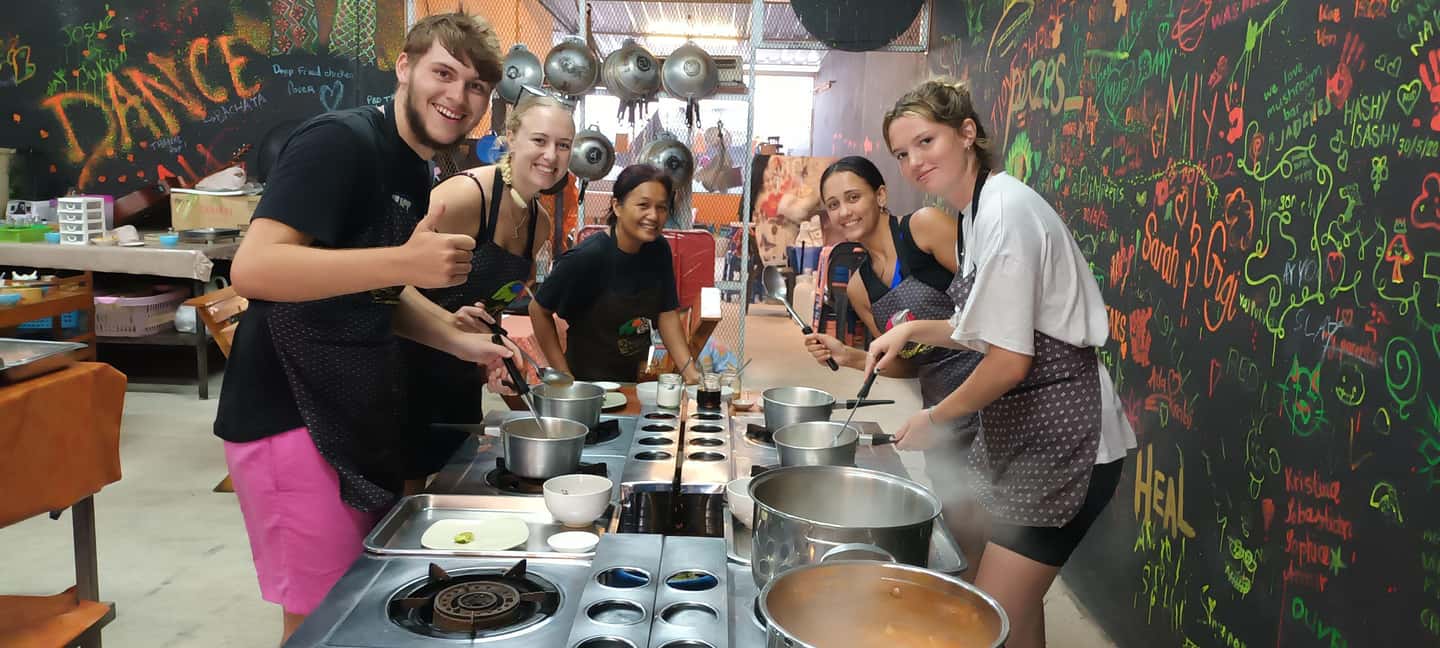
- Hands-on, own-station cooking in a clean open-air kitchen with a wok and utensils
- Choose a menu and work through a multi-course spread that includes curry, stir-fry-style dishes, and dessert
- Eat what you make, with the meal served so your food stays hot
- Take home a PDF recipe book and a digital photo album you can use later
- Clear rules on alcohol: included in your budget is food and water only
From Ao Nang pickup to the family-style cooking school
This class is built around convenience. You get hotel pickup and drop-off from Ao Nang, Krabi Town, Ao Nam Mao, Klong Muang, and Tubkaek Beach. Pickup times are split into a few windows, so you can usually match the experience to your schedule rather than losing a whole day.
In Ao Nang, the pickup windows are 09:00 / 12:50 / 16:45. In Klong Muang Beach it’s 08:30 / 12:40 / 16:20, and in Krabi Town it’s 08:30 / 12:40 / 16:30. If you’re staying around Railay, the route changes slightly: you go from the boat ticket office at Ao Nam Mao Pier via a short longtail boat ride (about 15 minutes). If you’re in Ton Sai, you meet at Phra Nang Inn reception in Ao Nang. Centara Grand Beach Resort & Villas guests use the hotel shuttle boat to Nopparat Thara Pier.
Why this matters for you: if you’ve already spent time in Krabi arranging taxis and waiting for drivers, this plan is calmer. You show up, you cook, you eat, you go back. That smooth logistics is a big part of why people rate the transport highly.
You can also read our reviews of more cooking classes in Ao Nang


Clean open-air kitchen: your station, wok, and utensils
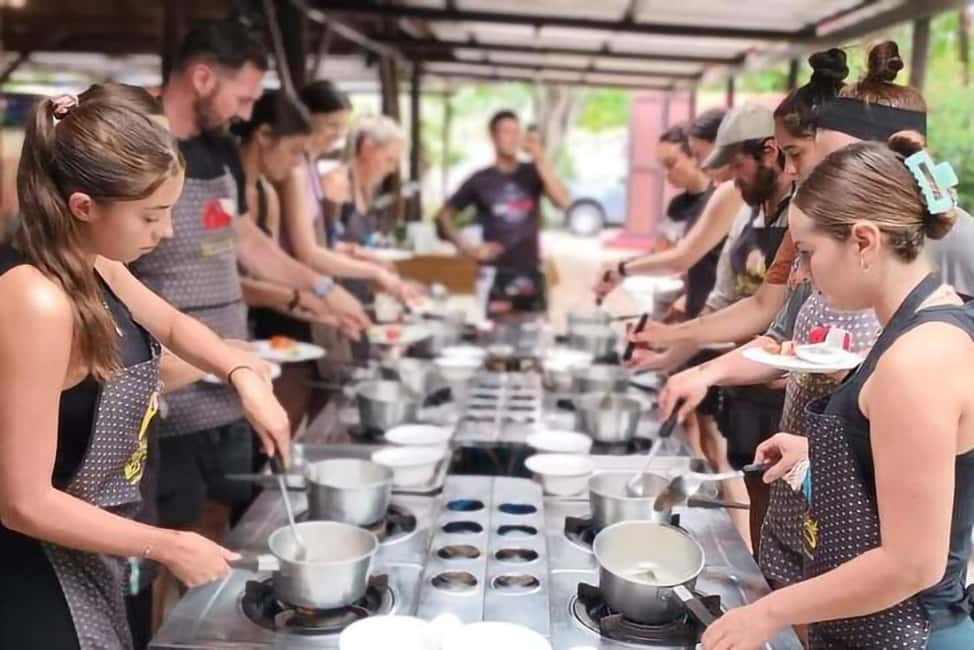
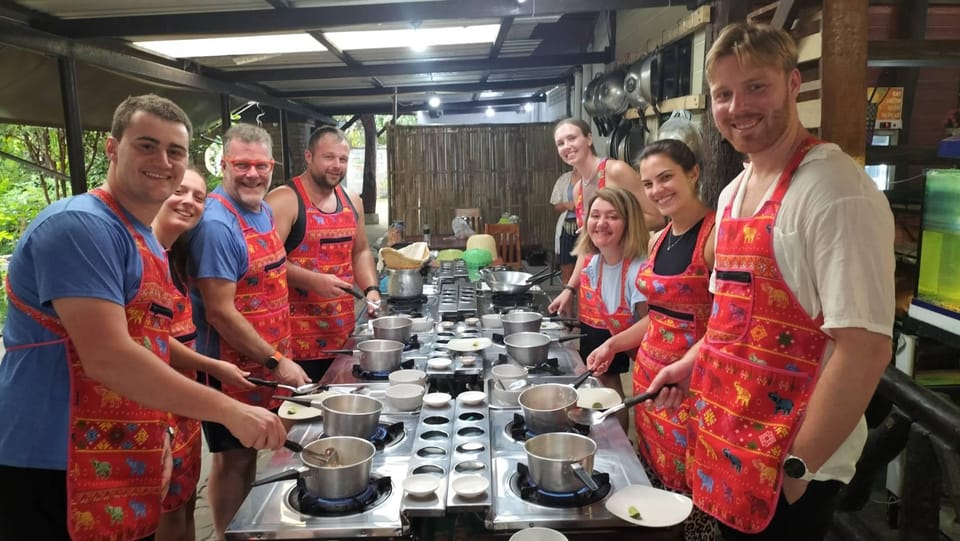
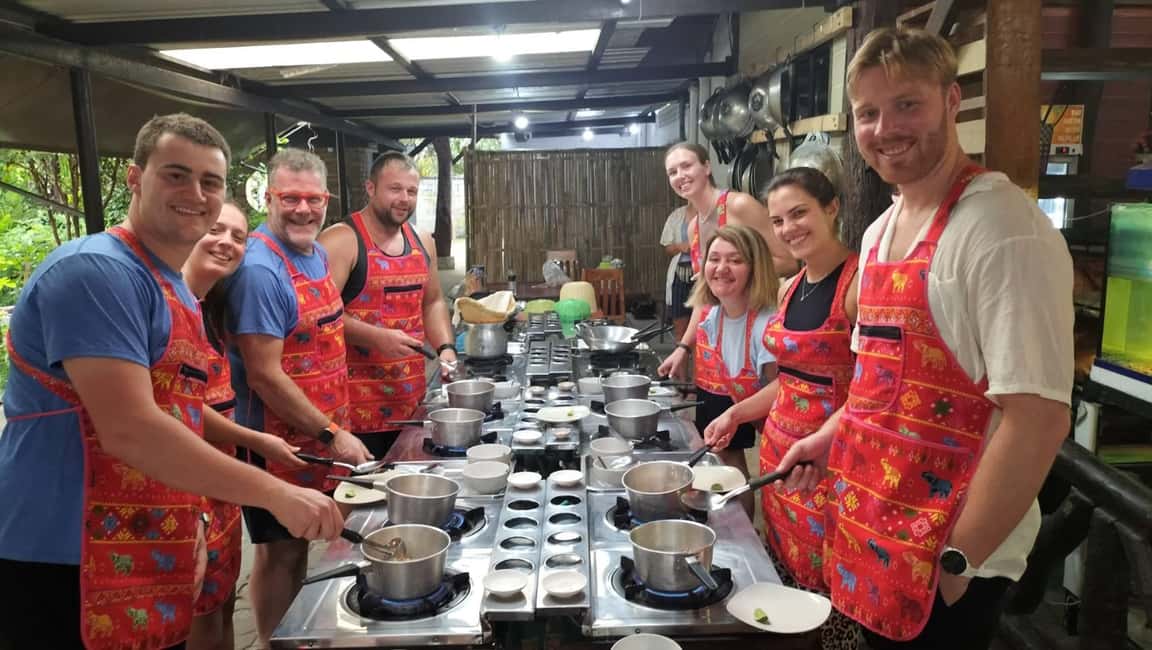
The cooking happens in a clean, open-air kitchen with individual cooking setups. You’re not standing shoulder-to-shoulder trying to share space like you might at some group cooking events. Your own setup means you can focus on timing and technique without constantly getting in each other’s way.
You’ll have your own station, wok, and utensils. That sounds like a small detail, but it changes the whole experience if you’re a beginner. You can actually practice chopping, stirring, and tasting, and you can repeat a step correctly because you’re working with your own tools.
The open-air setting also affects comfort. It’s outdoors, so wear comfortable clothes and plan for the feel of the day. If you’re sensitive to heat or weather, pick the time slot that fits your energy best rather than assuming the class will feel cool and indoor-like.
What the 4 hours really feel like: a step-by-step cooking flow
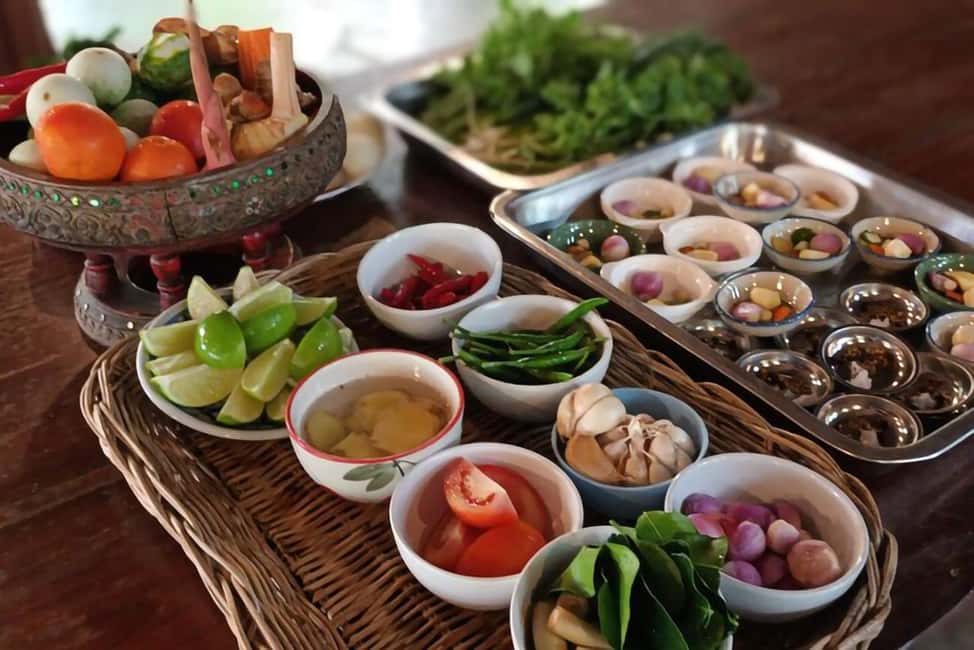
The total duration is about 4 hours, with multiple start times depending on your pickup zone. The class is taught in English. In practice, the teaching style is very practical: clear instructions, hands-on steps, and plenty of chances to ask questions while you’re cooking.
A useful detail is pacing. Some sessions are structured so you cook in stages and then eat portions soon after, keeping the food enjoyable instead of all sitting until the end. That’s great for your attention span, and it means you get to taste what you’ve just learned while the flavors are at their best.
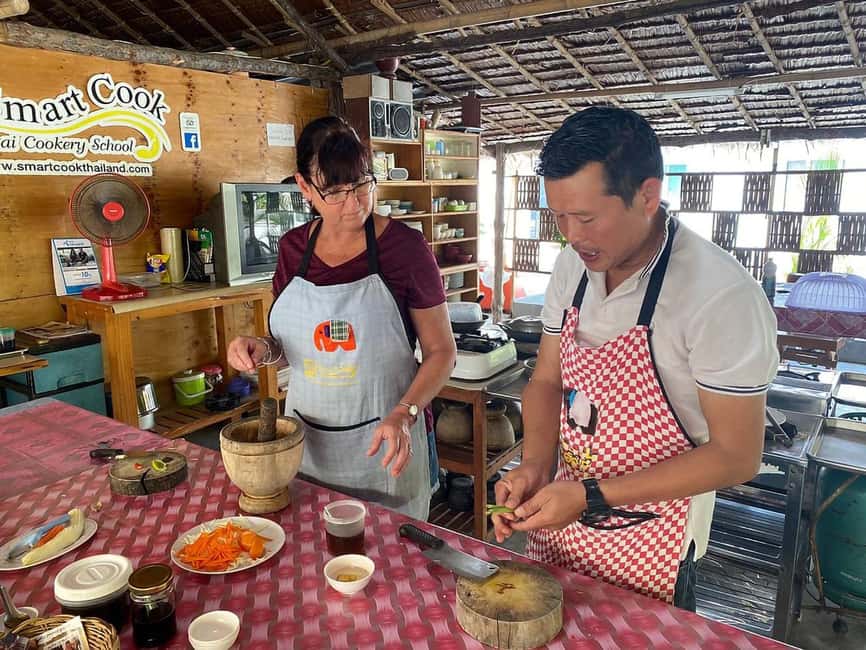
You’ll start by meeting the host family behind the school. Then the instructor walks you through your dishes. You’ll be given all the ingredients and refreshments you need, so you’re not stuck hunting down pantry items during your vacation.
How you choose dishes for a Thai 6-course meal
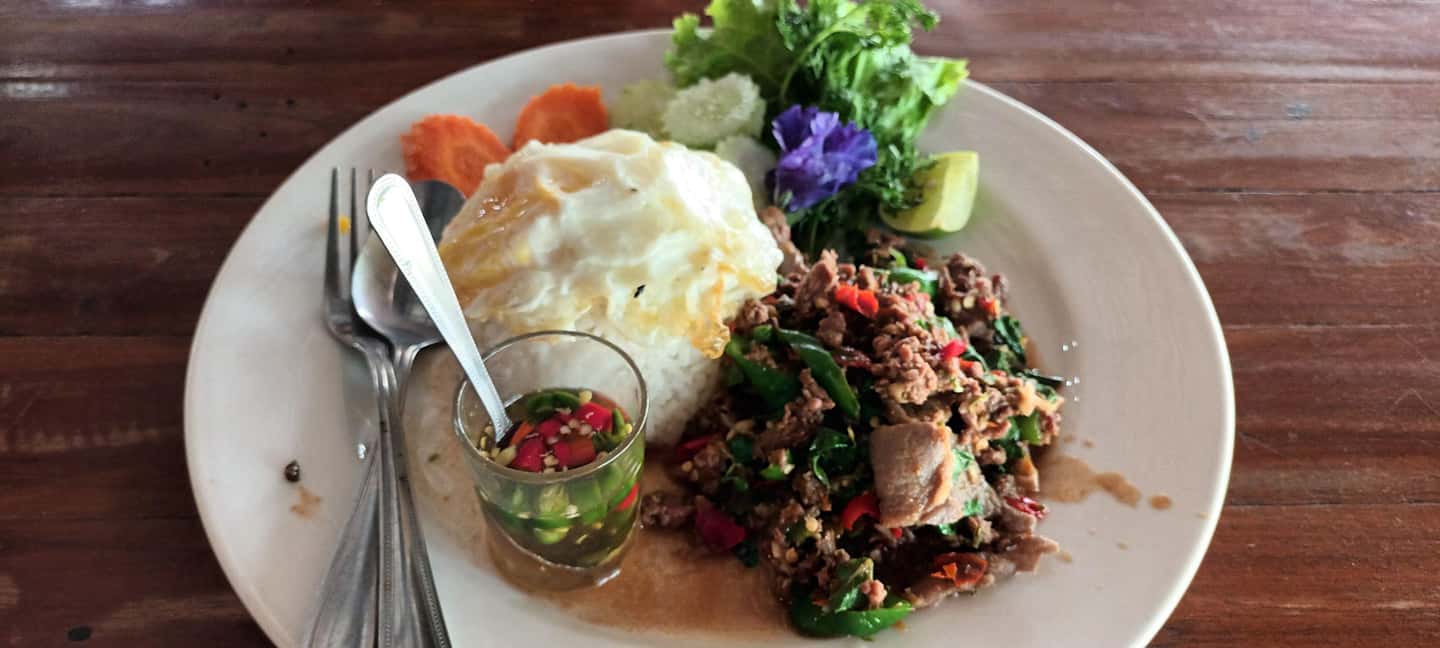
This class centers on a six-course meal. It includes curry, stir-fry-style dishes, and dessert, plus other Thai favorites that round out the menu. The exact mix can vary depending on what’s offered and what you pick, but the structure stays consistent: you cook the dishes, then you eat them.
One of the most helpful parts is that you don’t just get assigned one rigid menu. You can typically choose dishes from a list. From the common options people have made here, you might see items like:
- Spring rolls
- Pad Thai
- Massaman curry
- Thai red, Thai green, or Thai yellow curry
- Chicken in coconut soup or coconut chicken soup
- Sweet and sour prawn soup
- Papaya salad
- Cashew chicken
- Chicken basil rice
- Local soup
For you, the win is customization. If you’ve been dreaming about massaman curry but also want something noodle-based, you can usually steer your menu toward both.
The main dishes: curry, stir-fry, noodles, and dessert
Thai cooking is all about balance: salty, sweet, sour, and heat, with fresh aromatics doing a lot of the heavy lifting. In this class, you get to work those flavors in real dishes, not just in theory.
Curry is often the centerpiece. Massaman curry shows up as a frequent choice, and you may also cook one of the Thai curry varieties (red/green/yellow). The stir-fry side usually means cooking something that turns fast and needs attention—hot wok control and timing, not long simmering.
Noodles and soups can also appear on the menu. Pad Thai is a common pick, and coconut-based chicken soup or sweet-and-sour prawn soup give you a different flavor profile than curry. If you pick one of these, you practice a Thai pattern: building flavor first, then letting the dish come together with the right texture.
Dessert is part of the deal, too. It’s included in the six-course meal, so you’ll have a sweet finish without needing to plan a separate stop.
Two practical notes. First: don’t show up hungry. People consistently recommend coming ready to cook and eat, since you’ll be making multiple dishes back-to-back. Second: if you care about spice, tell the instructor what you can handle. One guest feedback point is that spice intensity may skew toward a more western level unless you request otherwise, so asking directly helps you get Thai flavor without turning the meal into a challenge.
You can also read our reviews of more tours and experiences in Ao Nang
Eating what you cooked: portions, freshness, and no-alcohol policy
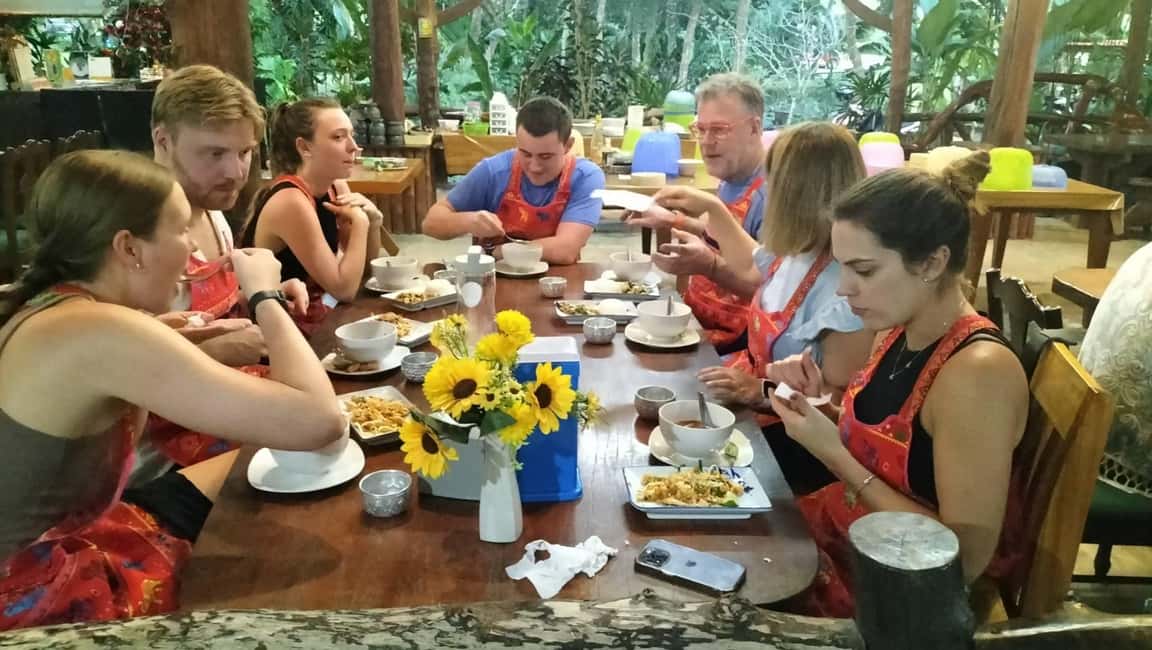
After you finish each course, you eat your creations. The class is set up so you can enjoy food soon after cooking rather than waiting until everything is cold and reheated. That keeps the lesson connected to the result, and it makes the meal feel like real dining, not just a cooking demo.
Included with your meal is drinking water. Alcohol is not included, and the experience doesn’t allow alcohol or drugs. If you’re used to adding beer to your vacation activities, plan on skipping it here or arranging it separately yourself.
Portions are generous. People describe the experience as plentiful, with enough food that it truly functions as your meal for the day. That’s a value factor: you’re not paying for instruction only. You’re paying for instruction plus a full Thai dinner outcome.
Meet the English-speaking chefs: names you might get
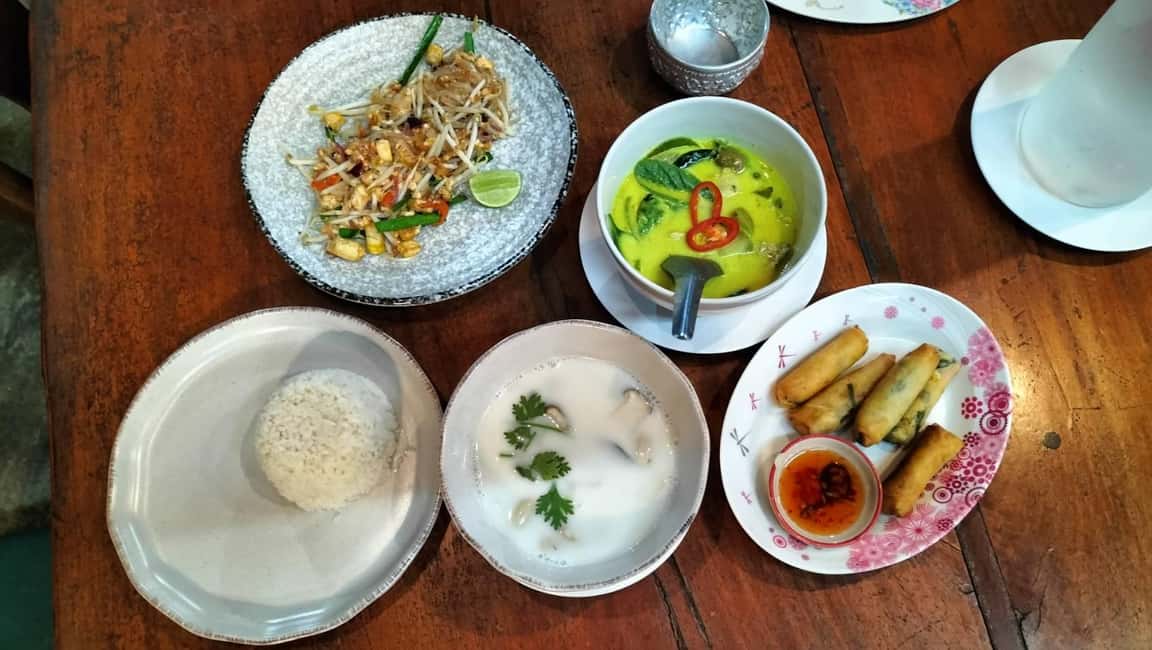
The quality of the class often comes down to the chef’s teaching style. Here, many sessions are led by instructors who guide clearly and keep things friendly. People have specifically mentioned Tony, Gataii, New, Ann, Two, Thiwa, and An as instructors, and the common thread is that they’re patient, funny, and willing to help you get the steps right.
This matters because Thai cooking can look intimidating on YouTube. In real life, the technique is teachable: how to chop, when to add aromatics, how to keep sauces balanced, and what to taste for as you go. A good teacher also gives you confidence for the home kitchen, not just a one-night win.
The take-home prize: PDF recipe book and digital photo album
One of the best reasons to do a cooking class is the ability to recreate it after you get back. This experience includes an online PDF version of the recipe book you can use at home. You’re not just getting memories; you’re getting instructions you can actually follow.
On top of that, you receive a digital photo album. Some people note that photos can be sent via WhatsApp after the class, so you leave with a visual record of what you made, not just a story.
Why this is valuable for you: Thai food at home can be frustrating if your notes are blurry or incomplete. With a PDF, you can check measurements and steps instead of guessing what you did right or wrong.
Value check: is $46 worth it in Krabi?
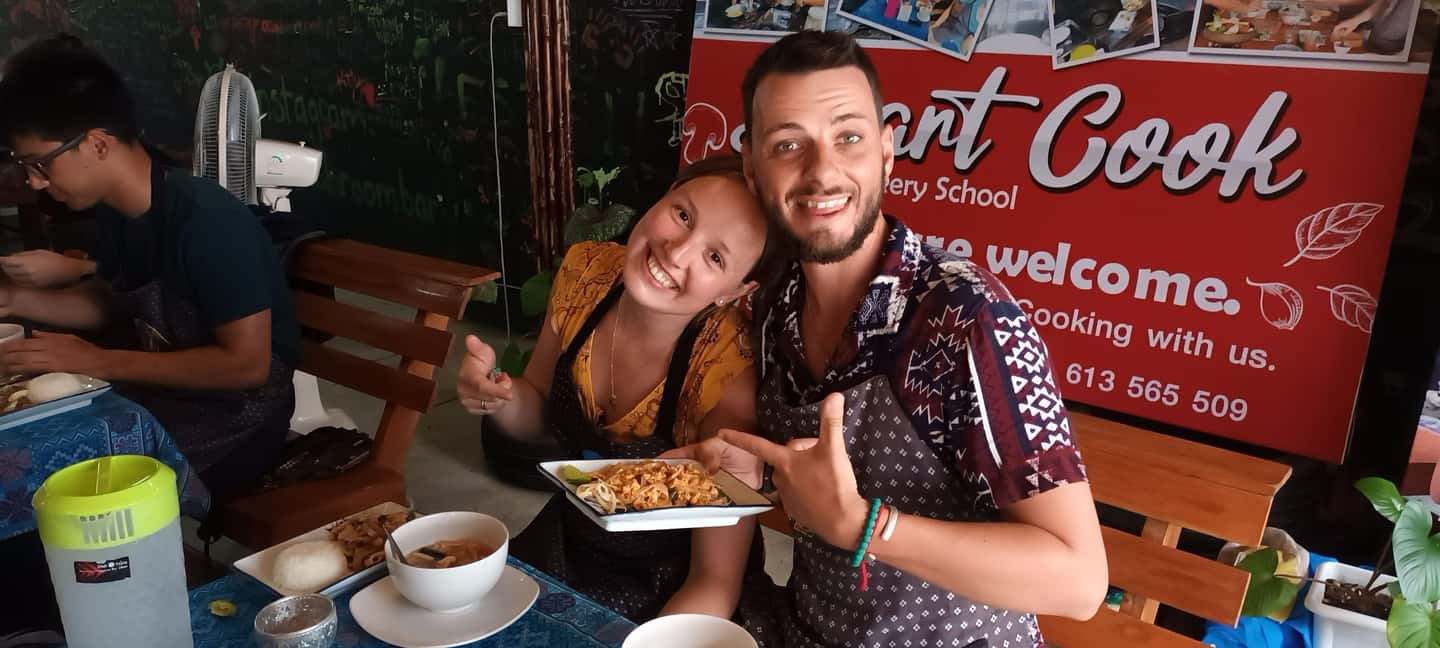
At $46 per person for a 4-hour, hands-on class, the value depends on whether you compare it to dinner plus cooking instruction separately. In this case, the price bundles several things that many paid classes tack on:
- Hotel pickup and drop-off
- A local host
- All ingredients for your dishes
- The meal itself (six courses)
- Drinking water
- An online PDF recipe book
- A digital photo album
That’s a lot of included basics for the price. If you’ve paid for a cooking class before without transport, you’ll feel the difference here. If you’ve paid for a Thai cooking lesson that doesn’t include a real meal, you’ll also feel the difference. You’re spending money on a full experience, not just a ticket to stand near a cutting board.
Who should book this, and who should skip it
This class is a great fit if you want a practical Thai cooking skill set during your Krabi trip. It’s especially good for first-timers because you get your own station and tools, and because the instruction is in English.
It’s also a strong choice for couples and small groups since the teaching style tends to be interactive. People mention having different group sizes, and that personalization shows up in how often you can ask questions.
A few groups should skip it:
- It’s not suitable for people with diabetes
- It’s not suitable for people with altitude sickness
- It’s not suitable for people over 95 years
Also remember: it’s open-air and involves active cooking, so if you have mobility limits or heat sensitivity, choose your start time carefully.
Quick tips so your Thai cooking class goes smoothly
Here’s how you get the best outcome without overthinking it:
- Don’t eat beforehand. You’ll be cooking and then eating a six-course meal, so starting too full can make the experience less fun.
- Wear comfortable clothes you can move in. The kitchen is outdoors and active.
- If you need dietary adjustments (like vegetarian), tell the team. There’s evidence they can handle vegetarian requests with no hassle.
- Plan for weather. Since it’s open-air, your comfort depends on the day.
- If you care about spice level, ask early so you can cook to your preference.
Should you book this Krabi Thai cooking class?
If you want an authentic Krabi activity that goes beyond eating at restaurants, I’d book it. The combination of hands-on cooking, clean open-air setup, and the included six-course meal makes it feel like you’re doing something real, not just purchasing a short show.
It’s especially worth booking if:
- you’re staying around Ao Nang and want easy hotel pickup
- you want to learn Thai techniques you can repeat at home using a PDF recipe book
- you like the idea of choosing dishes like curry, pad Thai, or spring rolls rather than getting one fixed plate
Skip it if you know outdoor heat will bother you, or if any of the listed suitability limits apply. Otherwise, this is one of those value-forward experiences in Krabi where the lesson and the dinner are built together.
FAQ
How long is the cooking class?
The experience runs for 4 hours.
Where is hotel pickup available?
Pickup is available from Ao Nang, Krabi Town, Ao Nam Mao, Klong Muang, and Tubkaek Beach. If you stay on Railay, pickup is handled from the boat ticket office at Ao Nam Mao Pier, and if you stay in Ton Sai, you meet at Phra Nang Inn reception in Ao Nang.
What does the price include?
The price includes hotel pickup and drop-off, a local host, all ingredients, your meal, drinking water, an online PDF recipe book, and a digital photo album.
Do I get a recipe book to take home?
Yes. You receive an online PDF version of the recipe book you can use after the class.
Is alcohol included?
No. Beer or any alcohol is not included, and alcohol is not allowed.
What language is the instructor?
The instructor teaches in English.
Is the class suitable for people with diabetes or altitude sickness?
No. It is not suitable for people with diabetes or altitude sickness.