REVIEW · AO NANG
Ao Nang: Hands-on Learn to Cook 3 Popular Thai’s street food
Book on GetYourGuide →Operated by Authentic Thai Cooking School · Bookable on GetYourGuide
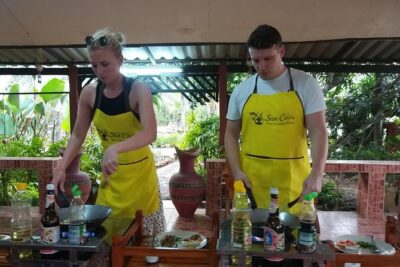
Thai street food turns into a hands-on lesson. In Krabi’s family-style kitchen, you cook three popular dishes yourself, with a friendly English-speaking instructor and real technique, not just watching. I especially like the hands-on, open-air setup and the fact you can choose vegan or vegetarian options from the start, so the class fits real eating styles. The main catch: there’s no pickup, so you’ll need your own way to get there and back.
The energy is light and funny, too. I’ve seen instructors such as Gataii, New, Tu, Poppy, and Khun An keep the room moving while explaining how Thai seasoning actually comes together. You’ll also leave with photos from the activity plus a PDF recipe book you can actually use at home.
One more thing to consider: you only cook 3 dishes in 150 minutes. That’s plenty for most people, but if you want a long, multi-course feast with lots of extra extras, you might feel slightly short-changed.
In This Review
- Key Things I’d Prioritize Before Booking
- Why This Ao Nang Cooking Class Feels Like Real Thai Home Cooking
- The Three-Dish Menu: Soup, Main, and Salad Choices That Make Sense
- Inside the Kitchen: Clean Open-Air Space and Small, Friendly Groups
- What Happens During the 150 Minutes (Step by Step)
- The Best Part: How You Learn Thai Sauce Logic (Not Just Recipes)
- Vegetarian and Vegan Options That Don’t Feel Like an Afterthought
- Taking It Home: PDF Recipes and Photo-Backed Memories
- Price and Value in Krabi: Why $28 Can Make Sense
- Practical Stuff Before You Go: No Pickup, and Getting Back Matters
- Who This Cooking Class Is Best For (And Who Might Skip It)
- Should You Book This Ao Nang Thai Street Food Cooking Class?
- FAQ
- What dishes can I choose to cook in this class?
- Is the class suitable for vegans, vegetarians, and gluten-free participants?
- What is included in the ticket price?
- Is alcohol included?
- Do they provide transportation or pickup?
- How long is the experience?
Key Things I’d Prioritize Before Booking
- Pick your own mix of soup, main, and salad (with vegan/vegetarian paths)
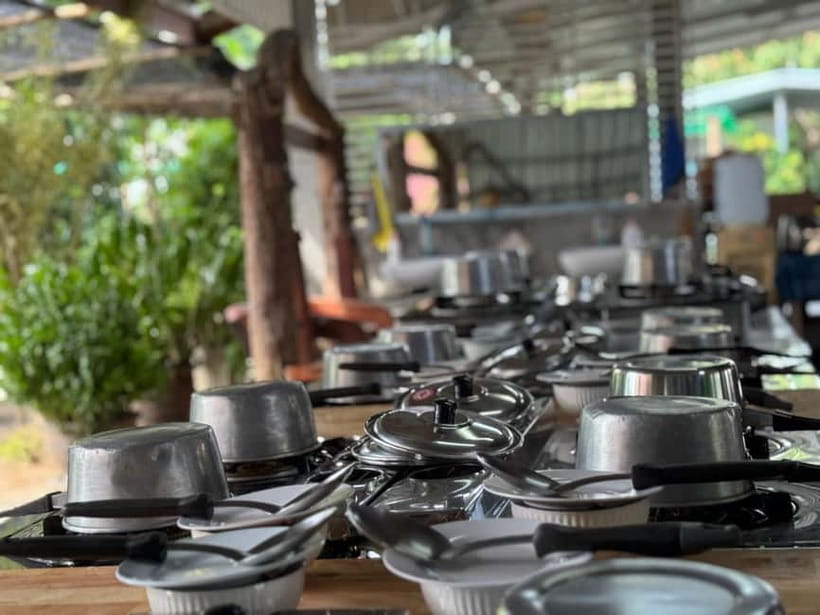
- Hands-on learning in a clean open-air kitchen, so you’re not stuck “helping from the side”
- English instruction with a dedicated guide who walks you through each step
- PDF recipe book + photos so you can recreate what you cooked, not just remember it
- Flexible customization like spice level and meat-free options (tofu/eggs depending on dish)
- A practical class length of 150 minutes, focused on techniques you can repeat fast
Why This Ao Nang Cooking Class Feels Like Real Thai Home Cooking
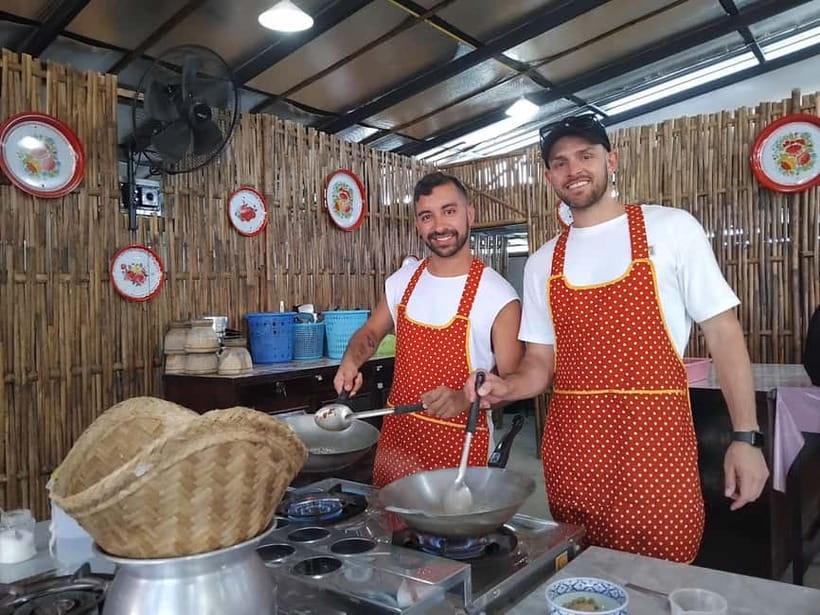
This is the kind of Thai cooking class that tries to copy how people actually eat at home: make a few standout dishes, cook them together, then sit down and eat what you made. You’re not waiting around for a finished plate to arrive. You’re doing the chopping, mixing, simmering, and tasting in the same rhythm that Thai home kitchens use.
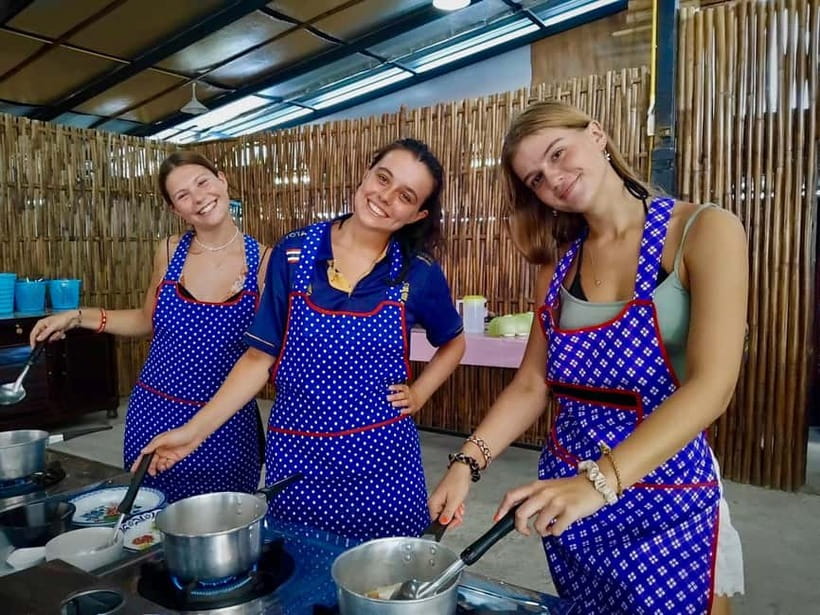
The setting also matters. The kitchen is open-air and clean, with a family-style feel. Even with the laid-back vibe, the workflow stays organized—because you’re cooking, not just collecting photos. That balance is a big reason this class lands so well for beginners: you feel relaxed, but you still get results.
Another part I like is the way instructors turn instructions into something you can repeat. When someone like New or Tu explains Thai flavors, it’s less about memorizing and more about understanding what sour, sweet, salty, and heat are doing in each dish.
You can also read our reviews of more tours and experiences in Ao Nang.



The Three-Dish Menu: Soup, Main, and Salad Choices That Make Sense
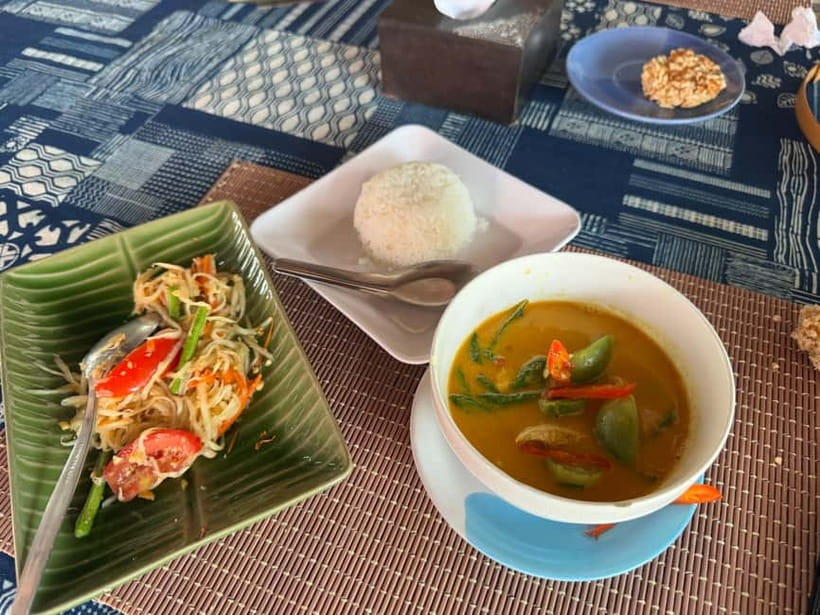
The class is built around one smart idea: cook 3 dishes from a set of popular Thai street-food styles. You choose from categories, which helps you tailor the experience to your taste.
Here are the typical choice blocks you’ll see:
- Soup: local chicken soup or chicken in coconut milk soup
- Main: Pad Thai, fried holy basil, or cashew nuts with chicken
- Salad: papaya salad or cucumber salad
You can also request vegan/vegetarian and gluten-free options in advance. And that’s not just a checkbox. In real life, you can get ingredient swaps and sauce adjustments so you still end up with something that feels like the dish, not a sad imitation.
If you’re a spice fan, you’ll usually be able to adjust heat during the process. If you’re avoiding heat, you’ll still taste the real structure of the seasoning—so the food doesn’t become bland just because you went easy on chili.
Inside the Kitchen: Clean Open-Air Space and Small, Friendly Groups
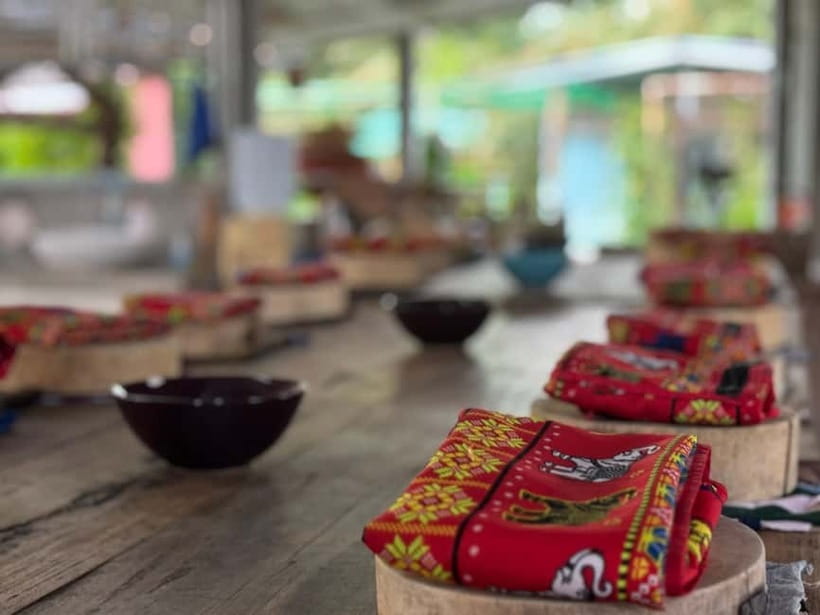
This class takes place in a traditional Thai family-style kitchen, and it’s set up for comfort. The kitchen is open-air, which helps keep things pleasant and makes the class feel less stuffy than indoor setups you might find elsewhere.
You might also notice the class size. Multiple experiences describe a smaller group feel—around a dozen people or so. That matters because it gives you more chances to ask questions and get help when your sauce needs rescue.
One practical perk from the way it’s run: you likely won’t be stuck doing dish duty. You’re cooking and eating, while the behind-the-scenes team handles the cleanup. That’s not a small thing when you’re learning. You want to focus on getting the flavor right, not scrubbing a wok.
What Happens During the 150 Minutes (Step by Step)
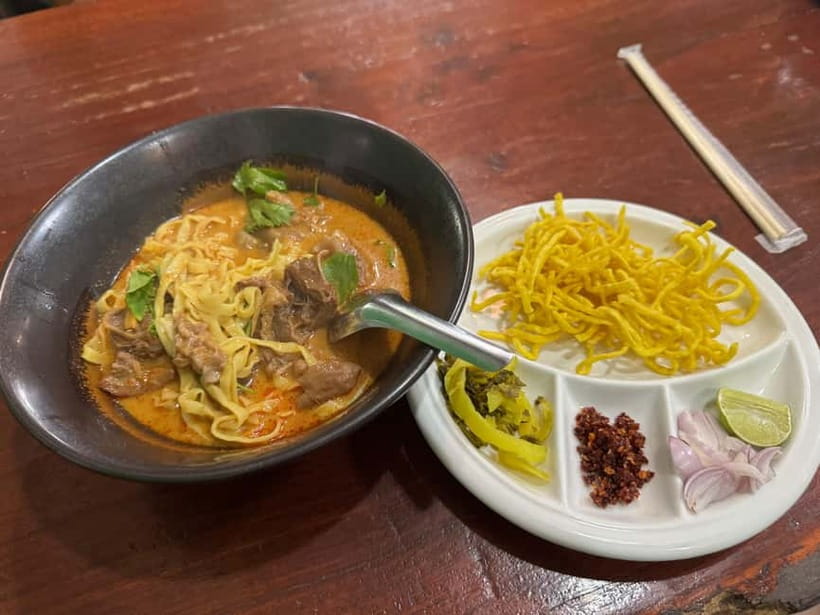
The timing is straightforward and realistic. You’re in class for about 150 minutes, which works out to enough time to cook three dishes without rushing your learning.
Here’s the flow you can expect:
- Meet your instructor and get your game plan
You’ll start by meeting the guide and going over what you’re making. The instructor also explains ingredient roles and key techniques so you know what to watch for while cooking.
- Start in the open-air cooking zone
You’ll move into your cooking stations. Ingredients are prepped enough that you’re not starting from scratch cutting everything for an hour, but you still do hands-on work like mixing, seasoning, and cooking steps.
- Cook your first dish (often soup)
Soups are a great starting point because Thai flavor balance shows up fast. You’ll learn how to build taste using the right combination of seasoning, aromatics, and texture.
- Move to the main dish (Pad Thai, holy basil, or cashew chicken)
This is where technique really shows. You’ll work on getting the wok action and seasoning right so the dish tastes like street-food Thai, not just “home cooking with spices.”
- Finish with your salad (papaya or cucumber)
Salads teach the Thai method of mixing and adjusting. You learn how citrus, salty notes, and chili heat all work together. For many people, this is also the most satisfying moment because you see the dish transform right in front of you.
- Eat what you cooked and compare notes
You’ll sit down with the food you made. This part turns your learning into something you can taste, not just understand.
- Get the PDF recipe book and photos
The PDF recipe book is included, and you’ll also have photos from the activity. If you like to cook after a trip, this is the piece that actually pays off later.
If you’re worried about cooking skill, don’t be. One reason this class gets consistently high praise is that instructors keep it doable, even when sauce or seasoning doesn’t land perfectly the first time. Mistakes turn into learning moments, not stress.
The Best Part: How You Learn Thai Sauce Logic (Not Just Recipes)
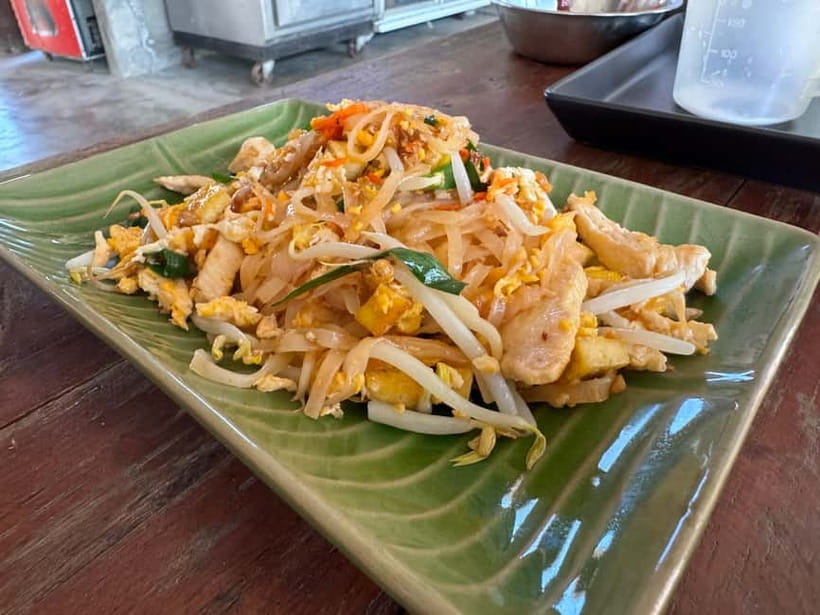
Thai food is often described as complex. In class, it becomes surprisingly logical. Instead of treating each dish as a mystery, you learn what each flavor component is supposed to do.
For example:
- In soups, the goal is a balanced broth where aromatics and seasoning don’t fight each other.
- In Pad Thai and stir-fry mains, you learn timing and how sauce coats without going watery.
- In papaya or cucumber salad, you learn how citrus and salt create the backbone, while chili controls heat.
That’s why instructors like Gataii and Poppy are frequently praised for making the process fun. When the class stays light, you’re more likely to pay attention to small details—like how to adjust a sauce rather than dumping in more ingredients blindly.
And yes, it’s normal for someone to make a sauce mistake. When that happens, the class doesn’t fall apart. The guidance helps you steer it back.




Vegetarian and Vegan Options That Don’t Feel Like an Afterthought
If you eat vegetarian or vegan, this is one of the more reassuring Thai cooking classes to consider. The menu includes vegan and vegetarian options, and you’re invited to let the operator know your dietary needs in advance.
Instructors can convert dishes and adjust sauces so you still get the correct style. In some vegetarian versions, tofu and eggs may be used depending on the dish. If you’re gluten-free, you also have an option path, as long as you communicate your restriction ahead of time.
My practical advice: message early and be specific. Say vegan vs. vegetarian, and mention gluten-free clearly. That gives the kitchen time to line up the right substitutions so you’re not guessing during the class.
Taking It Home: PDF Recipes and Photo-Backed Memories
The most useful souvenir here isn’t a magnet. It’s the PDF recipe book. You’ll get the recipe material after class, which is perfect if you cook at home but rarely trust your memory after a vacation.
The recipes are also structured enough that you can repeat the method, not just copy the final flavor. And because you chose your 3 dishes, the book matches what you made—not a random set.
Photos are included as well. You can take photos during the activity, and you’ll get photos from the experience too. It’s a small touch, but it helps you remember each step when you try again.
Price and Value in Krabi: Why $28 Can Make Sense
At $28 per person for a 150-minute hands-on class, this is priced like you’re paying for real instruction and real ingredients, not just a demo. The value comes from what’s included:
- Hands-on cooking class
- All ingredients
- Drinking water
- PDF recipe book
- Photos from the activity
What’s not included is also worth noting. There’s no alcohol included (beer and alcohol can be purchased), and there’s no transportation service. If getting to and from the kitchen costs you extra, factor that into your real total.
Still, for many people, the math works because you leave with:
- Three cooked dishes worth of skills
- A recipe file you can use again
- Less time spent on “vacation eating” and more time spent learning technique
Practical Stuff Before You Go: No Pickup, and Getting Back Matters
This is one of those activities where logistics can quietly affect your mood. There’s no pickup and no transportation service, so plan your ride.
Also, getting a Grab can be a small hassle on the way back. If you don’t want to think about it at the end of the class, time your ride request a bit early and keep your pickup point clear.
Bring yourself and comfortable clothes. You’re cooking in a kitchen environment, and you’ll be standing and moving. Also, if you want a more tailored experience, tell the operator your dietary restrictions in advance.
One more note: pets aren’t allowed, and alcohol and drugs aren’t allowed. If you’re traveling with family, plan accordingly.
Who This Cooking Class Is Best For (And Who Might Skip It)
This class is a strong fit if:
- You want hands-on learning, not a sit-and-watch experience
- You’re traveling with friends, couples, or family and want a shared activity with real food at the end
- You’re a beginner who wants clear steps and supportive help
- You want dietary flexibility without feeling like you’re being forced to “settle”
It’s also been enjoyed by kids. One family shared that a younger child had fun with the class, which suggests the atmosphere is friendly and not overly serious.
You might skip it if:
- You want a bigger menu, longer class, or more courses
- You strongly prefer a chef demo over active cooking
- You don’t want to handle your own transport to a class location
Should You Book This Ao Nang Thai Street Food Cooking Class?
If you want a practical souvenir—something you can cook again at home—this class is an easy yes. I’d book it if you like learning by doing, care about eating authentic Thai flavors, and want a PDF recipe book that matches what you cooked.
I’d also book it if you’re vegetarian, vegan, or gluten-free and you want clear communication ahead of time. The class is set up to handle requests, and instructors are used to adapting dishes while keeping the Thai method intact.
Just don’t book it last minute if you hate transport planning. With no pickup, you’ll need to think about how you’ll get there and back comfortably.
If those two points work for you, you’ll likely walk away fed, informed, and ready to make Pad Thai or papaya salad without guessing at the seasoning.
FAQ
What dishes can I choose to cook in this class?
You choose three dishes from set options, typically including one soup (local chicken soup or chicken in coconut milk soup), one main (Pad Thai, fried holy basil, or cashew nuts with chicken), and one salad (papaya salad or cucumber salad).
Is the class suitable for vegans, vegetarians, and gluten-free participants?
Yes. Vegan, vegetarian, and gluten-free options are available upon request. You should inform the operator in advance about any dietary restrictions.
What is included in the ticket price?
The experience includes a hands-on cooking class, all ingredients, drinking water, a PDF recipe book, and photos of the activity.
Is alcohol included?
No. Beer and alcohol are available for purchase, but they are not included in the price.
Do they provide transportation or pickup?
No. There is no pickup and no transportation service included.
How long is the experience?
The class lasts about 150 minutes.