REVIEW · KRABI
Krabi: Guided Kayaking Tour at Ao Thalane
Book on GetYourGuide →Operated by Anda Krabi Seatour · Bookable on GetYourGuide
Kayaking in Krabi feels like backstage access. This guided paddle through Ao Thalane pairs easy instruction with slow, scenic cruising past mangrove stretches and quiet waterways you can actually savor.
The two things I really like are the chance to explore the mangrove forests without tearing up the environment, and the wildlife-focused route that takes you toward calmer lagoons.
One consideration: this tour is not suitable for pregnant women or people with back problems, so check your comfort before you book.
In This Review
- Key points
- Ao Thalane by kayak: why this route feels calmer
- Who it’s best for (and who should skip it)
- Morning vs evening: what to consider before you choose
- Getting set up: training, gear, and your packing checklist
- The paddling flow: what happens from launch to finish
- Stop 1: pickup around Krabi Province (choose your closest option)
- Stop 2: kayak route through mangroves, canyons, caves, and lagoons
- Stop 3: Bok Korani National Park and the Ao Nang bay area
- Wildlife spotting: how to make monkey and bird sightings more likely
- The guide quality: why Farut’s style gets so much praise
- Group size and pacing: the value of not feeling herded
- Price and value: is $34 a smart deal for Krabi?
- Practical logistics: pickup, drop-off, and what to expect
- Quick checklist before you go (so you don’t scramble)
- Should you book the Ao Thalane guided kayaking tour?
Key points
- Small-group kayaking keeps the pace human and the stops actually feel unhurried
- Intro training first so even first-timers can get moving
- Mangroves + canyons + caves + lagoons in one outing, without feeling rushed
- Bok Korani National Park adds protected-area scenery and more chances to see animals
- Wildlife viewing with respect (no crowding, and you’re encouraged to keep distance)
- Value at $34 because transport, water, and fruit are included for a full 5 hours
Ao Thalane by kayak: why this route feels calmer
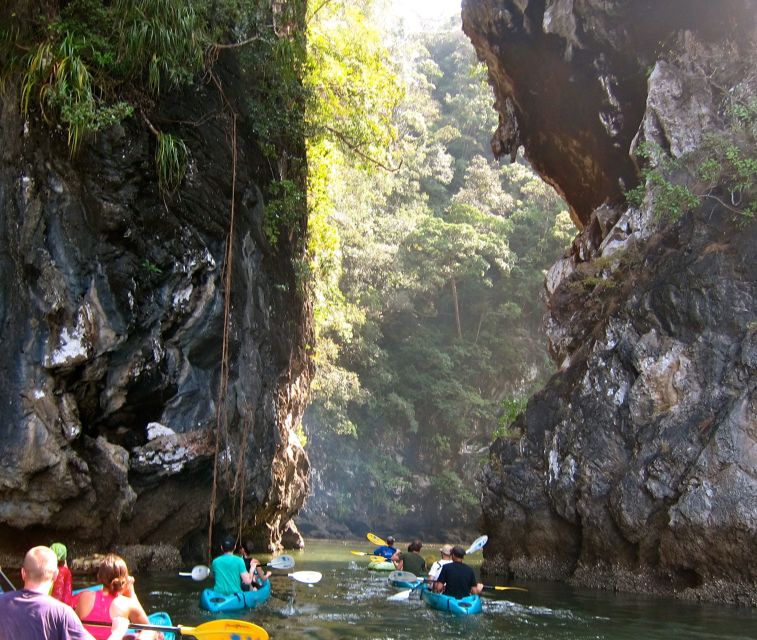
Ao Thalane sits in Krabi Province, and this tour is built around the idea of getting close to the coast without trampling it. You’ll paddle through mangrove zones and into wider areas where the water turns into a slow-moving “watch from the kayak” kind of experience.
What makes it feel different from the fast, photo-stop style tours is the rhythm. The pace is described as slow cruising through changing coastal zones, with stops built in so you can look around, take pictures, and actually notice what’s living there.
And yes, this is a guided trip, not a rent-and-go. That matters in places like mangroves and caves/canyons where the “where should I paddle?” question can get distracting fast.
You can also read our reviews of more guided tours in Krabi


Who it’s best for (and who should skip it)
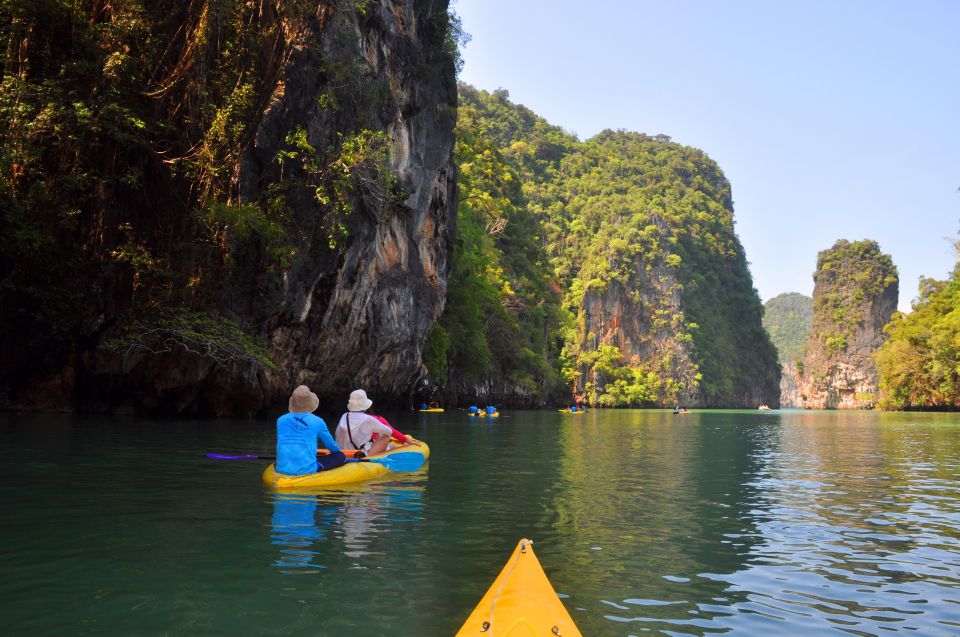
This is a good fit if you want something active but not technical. The good news for most people: you don’t need previous kayaking experience. They also start with an introductory training session so you can get your paddle technique sorted before you’re in the thick of it.
It’s also a solid choice if you care about wildlife, because the plan includes observation time—native birds and monkeys are specifically called out, and the lagoon segment is meant for that kind of viewing. You’ll spend time in mangrove/coastal ecosystems where you’re not just looking at rocks.
Skip it if you’re pregnant or you have back problems. That’s not a “maybe it’ll be fine” situation here—this activity involves paddling and getting in/out of a kayak, so discomfort could ruin the day.
Morning vs evening: what to consider before you choose
You can pick between a morning tour or an evening tour. That choice affects everything: the light for photos, how hot you’ll feel, and how the day flows around the rest of your Krabi plans.
From the way the route is described—sun, protected waterways, wildlife watching—morning can feel more comfortable for many people because you’re starting earlier and you’re less exposed to the peak heat. Evening can be nice if you want a later start, but it can also mean you’re paddling with whatever weather decides to show up.
One practical tip: if you’re booking with timing flexibility, it can help to consider tide conditions. Some guides/routes are easier or more scenic when water levels cooperate, and at least one route note specifically says to check on high tide. That’s not a guarantee, but it’s a smart thing to ask when you confirm your time.
Getting set up: training, gear, and your packing checklist
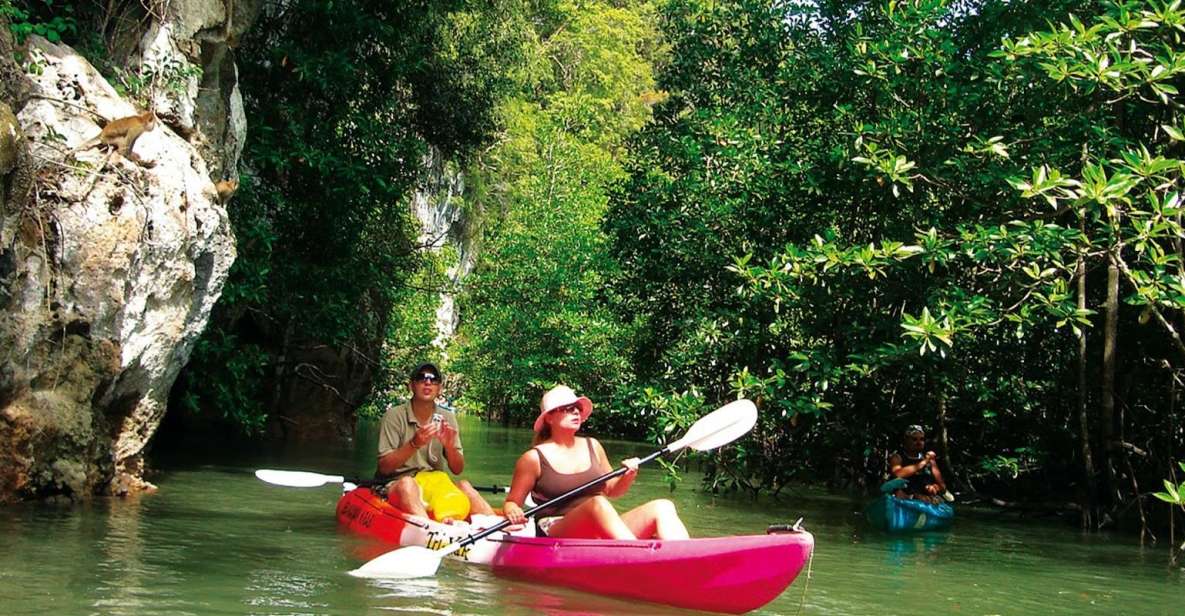
Your day starts with guidance on using your kayak—an introductory training session designed to get you comfortable quickly. You’ll learn how to paddle effectively and how to move without fighting the water. That short start is the difference between paddling as a workout and paddling as a smooth glide.
Bring practical stuff. The tour asks for:
- Comfortable shoes
- Sunglasses
- Sun hat
- Camera
And the “know before you go” list adds what you’ll actually want for a Thai coastal day:
- sunscreen
- a swimming costume
- beach footwear
- a towel
Also note what you shouldn’t bring: no large bags or luggage, and no pets. Smoking is not allowed. If you’re the type who packs everything except the kitchen sink, this is your sign to travel light for once.
One small detail I like: you’re given water and fruit during the tour, which helps you stay focused on paddling instead of constantly thinking about snacks.
The paddling flow: what happens from launch to finish
This is a 5-hour outing, and it’s structured around a sequence of coastal zones. You’ll start with pickup, then get to the launch area, then go through training, then settle into the route: mangroves, canyons, caves, and lagoons.
You can also read our reviews of more tours and experiences in Krabi

Stop 1: pickup around Krabi Province (choose your closest option)
The tour supports multiple pickup points, including Pak Nam, Nong Thale, Ao Nang, and Krabi. If you’re staying in Ao Nang, pickup from hotels in Ao Nang is included, with the exact time confirmed by the local partner.
Why I think this matters: Krabi Province is spread out, and travel time can quietly eat your day. Having multiple pickup locations usually means you’re not wasting an hour crossing town before you even see the water.
Just be aware that sometimes pickup can be shared across the same vehicle route for multiple groups. So while the plan is straightforward, the exact arrival moment can depend on who else is getting collected.
Stop 2: kayak route through mangroves, canyons, caves, and lagoons
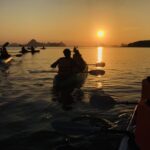
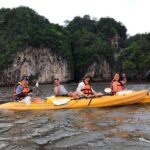
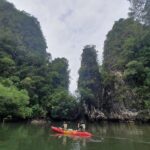
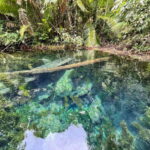
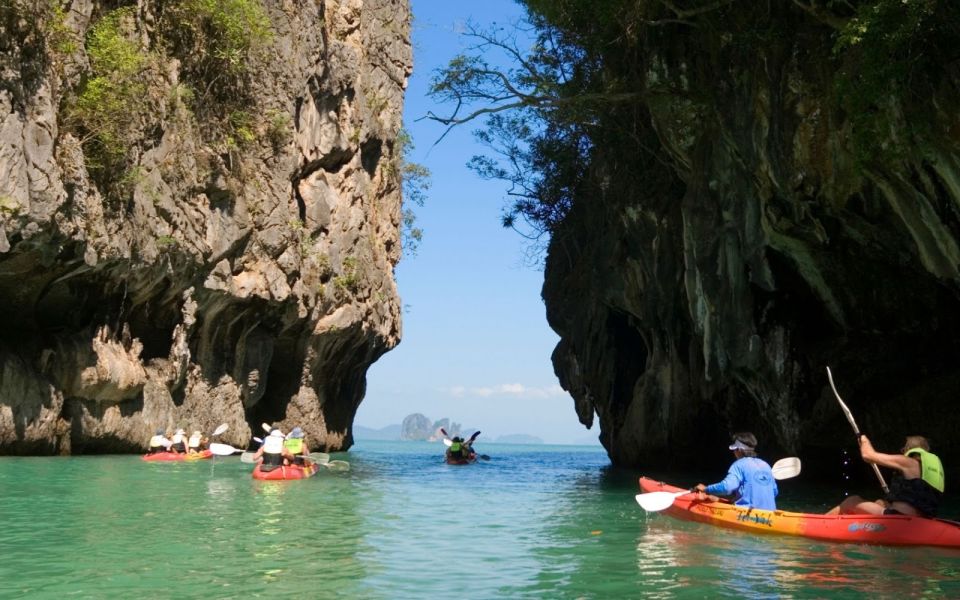
Once you’re out on the water, the description is clear: you cruise slowly through different coastal zones and pass mangrove forests, canyons, caves, and lagoons. This is where the kayaking turns into the sightseeing.
Mangrove forests are the headline here. Mangroves create narrow, sheltered waterways where you can hear and see more because the water isn’t always open and noisy. It also gives you the best chance at quiet wildlife viewing.
Then you move through more varied formations—canyons and caves/cave-like sections—where the viewpoint changes even if you’re paddling steadily. The goal isn’t speed; it’s passing those features at a pace where you can look up, look around, and not miss the little things.
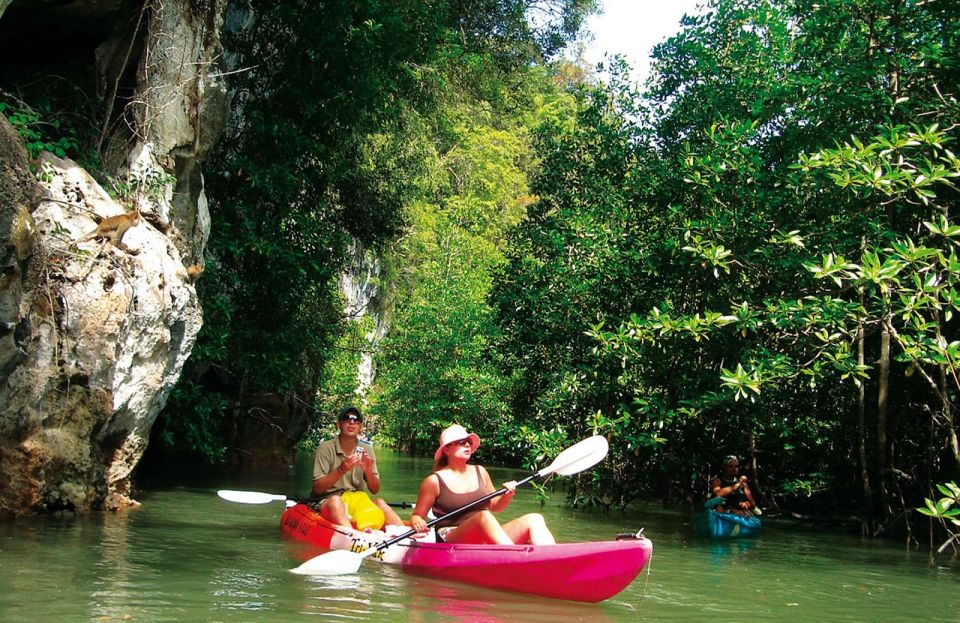
Finally, you hit the lagoon portion. Wildlife observation is specifically mentioned here, with attention to native birds and monkeys. In practical terms, that means the guide will help you spot movement and judge when you should keep gliding versus when you should stop and watch.
Stop 3: Bok Korani National Park and the Ao Nang bay area
The route includes Bok Korani National Park and Ao Nang, described as one of the most beautiful bays in Thailand. The park element matters because it’s framed as an ecosystem you visit without causing damage—so your role is to pass through and observe.
This is also where you start to understand why the guide’s job is more than just leading the way. A good local guide points out what you’d miss: how the waterways connect, where the animals tend to appear, and what to watch for so you’re not just paddling in a straight line.
Some guides also adjust the route to avoid heavy crowding, which can mean more time in quieter stretches. When that happens, the experience feels less like a “checklist tour” and more like you borrowed the water for a couple of hours.
Wildlife spotting: how to make monkey and bird sightings more likely
Wildlife viewing is a big part of this tour, and the plan encourages you to keep your eyes open for birds and monkeys around the lagoons and mangroves.
Here’s how to get the most from it while still respecting the environment:
- keep your paddle strokes steady during spotting moments
- listen for guide cues instead of shouting over the water
- give animals space and avoid trying to “approach” for a better photo
One thing I really value on nature tours is when the guide treats wildlife as wildlife—not as a prop. This activity emphasizes observing animals in their natural habitat, and it also includes responsible behavior notes like not feeding monkeys.
Even if you don’t get a dramatic close-up, you’ll likely see smaller signs—birds in the canopy, movement in the mangrove roots, and occasional sightings from the waterline.
The guide quality: why Farut’s style gets so much praise
English is the listed guide language, and the guiding style is frequently praised as friendly and informative. One guide name that comes up repeatedly is Farut, and the consistent theme is that he gives information during the paddle rather than only at the start.
What I like about guides who do it this way is simple: you’re not just watching scenery pass. You’re learning what you’re seeing and why it matters.
A second thing that shows up in real-world feedback: smaller groups make it easier for the guide to slow down when something interesting appears. People describe group sizes around 8 to 10 as a sweet spot—enough company to feel social, not so many that you’re stuck behind a line.
If you book this, it’s worth paying attention to the small-group setup. It affects everything: how often you stop, how much time you get for photos, and whether your guide can tailor attention to your pace.
Group size and pacing: the value of not feeling herded
The tour offers small group availability, and that’s exactly what you want for kayaking. Too many people means you end up waiting in awkward lines, and kayaking doesn’t wait gracefully. You’re either spread out or you’re bunching up—either way, the experience gets less peaceful.
The pacing described here is slow cruising, with time for stops. In practice, that matches what you want in mangroves and lagoons. If you’re trying to spot animals, rushing kills the mood.
You also get a training session at the beginning, which helps everyone start with similar expectations. That makes the rest of the trip smoother and less chaotic.
Price and value: is $34 a smart deal for Krabi?
At $34 per person for a 5-hour guided kayaking experience, this is priced in the “good value” range—especially because key basics are included.
What you get included:
- transportation
- water
- fruit
- an experienced tour guide
So you’re not paying extra just to get from your hotel to the water and back, at least for pickup/drop-off options covered by the tour. The main exception: hotel transfers from Railay Beach or Koh Lanta are not included, so if you’re based there, you may need to check whether you can reach an included pickup point yourself.
Why this price works better than it looks: you’re getting the guide plus the environment-focused route plus time on the water. If you’ve done cheap excursions before, you know what the “hidden cost” often is—either lots of extras, or a guide who talks for five minutes and leaves you to figure it out.
Here, the emphasis is on instruction and on guided wildlife viewing, which is what you want when you’re learning kayaking for the first time.
Practical logistics: pickup, drop-off, and what to expect
Pickup and drop-off options are flexible, with multiple locations supported: pickup from Pak Nam, Nong Thale, Ao Nang, and Krabi, and drop-off back in those areas.
If you’re staying in Ao Nang, pickup from hotels in Ao Nang is included, and you’ll get an advised pickup time. That time varies by local partner scheduling, which is normal for shared transport.
What you should do to make the day easier:
- confirm your pickup time the day before
- arrive with clothes ready for sun and water
- keep your carry-on minimal since luggage/large bags aren’t allowed
Weather can also happen in Thailand—rain, wind, and sudden downpours are always possible. If that happens, you may still paddle, so bring a mindset for tropical weather rather than “bright skies only.”
Quick checklist before you go (so you don’t scramble)
If you’re trying to travel like a competent adult, this list covers what’s explicitly requested:
- comfortable shoes
- sunglasses
- sun hat
- camera
- sunscreen
- swimming costume
- beach footwear
- towel
And double-check what’s prohibited:
- pets
- smoking
- luggage or large bags
This is one of those tours where being prepared keeps you from getting irritated during the best part of the day: the slow, quiet paddling through mangroves.
Should you book the Ao Thalane guided kayaking tour?
Book it if you want a guided, first-timer-friendly kayak trip that focuses on mangroves, wildlife viewing, and protected-area scenery at a price that doesn’t feel like a tourist trap.
Don’t book it if you have back issues or you’re pregnant, because paddling and getting in/out of the kayak are part of the experience and the tour specifically says it isn’t suitable.
If you’re choosing between morning and evening, pick the time that fits your comfort with heat and your plans in Krabi. And if timing matters for you, ask your confirmation about conditions like high tide, since that can affect how the route feels in mangrove waterways.
If you want Krabi to feel quieter and more hands-on—paddle, watch, learn—this is a strong option at $34 for a full 5 hours.