REVIEW · KRABI
Smart Cook Thai Cookery School in Aonang, Krabi
Book on Viator →Operated by Oh-Hoo · Bookable on Viator
Thai flavor lessons in Ao Nang feel practical. I really love the small-group setup with your own station, and the curry paste from scratch part that makes the food taste real. The one catch is the single-traveler transfer fee, so your cost can jump if you’re not starting from Ao Nang.
You’re cooking in a clean open-air kitchen, and the teaching style is hands-on. Instructors like Pop, Chef Ann, and Poppy show up in this school’s lineup, and the vibe stays welcoming even if you want mild flavors.
You’ll finish with a meal you made, plus a certificate and recipe book—perfect if you like eating right away. Plan to be flexible on timing and menus, because the dishes depend on the sets offered that day.
In This Review
- Key things to know before you go
- Thai cooking with a small open-air kitchen in Ao Nang
- Price and value: what $43.87 buys you in real terms
- Getting there: free pickup, drop-off areas, and single-traveler fees
- The core lesson: what your 4 hours is really spent doing
- Your menu choices: Daily set, Special A/B, and the Dinner set
- Cooks eat what they make: tasting, portions, and the mango sticky rice payoff
- Spice control and dietary options you can actually use
- Your instructors: hands-on guidance that keeps you moving
- Who this class suits best (and who might not love it)
- Things to know before you book
- Should you book Smart Cook Thai Cookery School in Ao Nang?
- FAQ
- How long is the cooking class?
- How much does it cost?
- Is pickup from hotels included?
- What if I’m a solo traveler?
- How many dishes will I cook?
- Does the class include curry paste from scratch?
- Are vegetarian, vegan, or mild-spice options available?
- Do I get a recipe book and certificate?
- What if the weather is poor?
Key things to know before you go
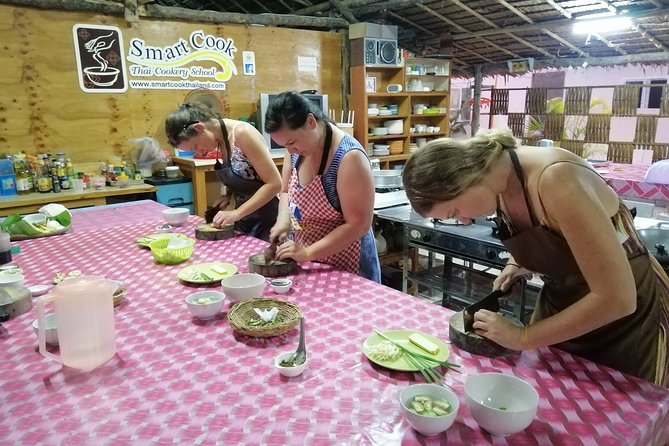
- Five dishes, hands-on: You cook five different Thai dishes and then eat them.
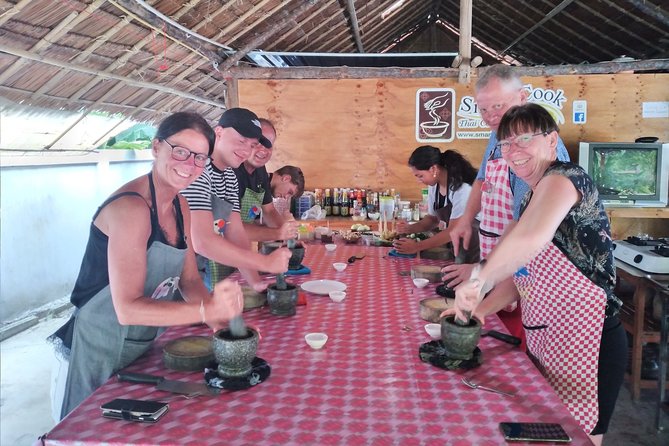
- Curry paste practice: You grind and make your own curry paste using a mortar and pestle.
- Open-air kitchen layout: Everyone gets a wok and their own cooking station.
- Pick a menu set: Daily, Special Set A/B, and Dinner sets guide what you’ll learn.
- Spice and dietary control: You can adjust dishes to be vegetarian, vegan, spicy, or non-spicy.
- Pickup depends on your start point: Ao Nang/nearby areas are covered, but single travelers may pay extra.
Thai cooking with a small open-air kitchen in Ao Nang
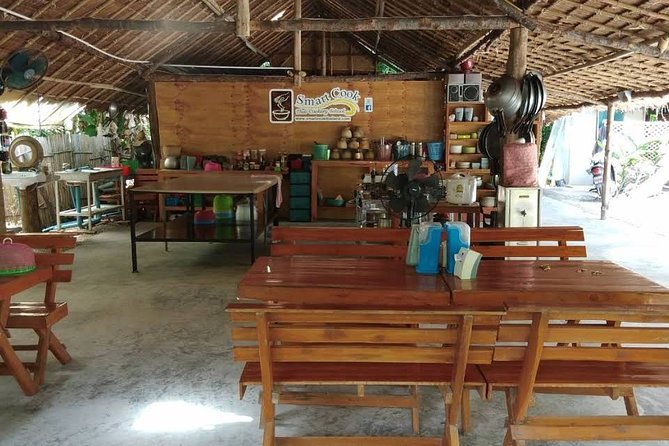
Ao Nang has plenty of good food. What it often lacks is the chance to learn the mechanics behind the flavors. This class focuses on exactly that: you don’t just watch—you cook in an open-air kitchen with your own wok and station.
The payoff is that Thai food isn’t magic. It’s herbs, vegetables, spices, and timing. When you make curry paste yourself and then use it in a dish, you start to understand what’s doing the work in the sauce—salt, heat, aromatics, and balance.
There’s also something comforting about the pace. The group is intentionally small (the experience is described as limited to 12 for more personalized attention, and the activity details also keep the group cap low). That means you can actually get help while your pan is hot, not later while you’re packing up.
You can also read our reviews of more tours and experiences in Krabi.



Price and value: what $43.87 buys you in real terms
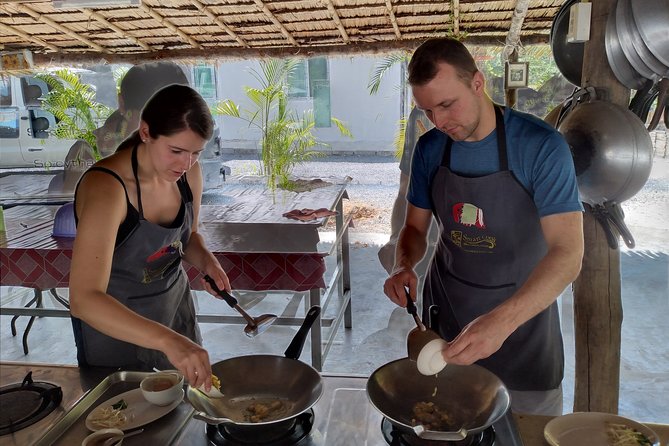
At about $43.87 per person, this is a straightforward value play if your goal is to leave with both skills and dinner. The headline value is that the class includes much more than instruction: you get a recipe book and a completion certificate, plus food tasting and drinking water.
You’re also getting transportation in many cases. Hotel transfer is included for pickup/drop-off in Ao Nang and nearby areas like Ao Nam Mao, Krabi Town, Khlong Muang, and Tub Kaek (with a minimum traveler requirement). That matters, because cooking classes that don’t include transfers often turn into extra hassle fast—especially when you’re trying to coordinate with partners or family.
The only time the math gets less friendly is if you’re a single traveler coming from Krabi Town or Klong Muang, or from Tub Kaek. The class itself is the same, but the transfer cost is higher when you don’t meet the single-traveler transfer terms.
Getting there: free pickup, drop-off areas, and single-traveler fees
This is one of the easiest classes to fit into a day because pickup and drop-off are part of the deal. If you’re staying in Ao Nang (and certain nearby areas listed for pickup), transfers are included as long as the class meets its minimum traveler requirement.
If you’re traveling solo, read this carefully. There’s an extra transfer fee for singles:
- From Krabi Town or Klong Muang: 500 THB per person
- From Tub Kaek: 600 THB per person
If you’re unsure where you’ll be picked up from, confirm it before you go. The class runs with a set start time, and the pickup is part of what makes the experience feel smooth.
One more practical note: the experience includes a mobile ticket, and it’s near public transportation. So even if the pickup timing isn’t your favorite part, you have options.
The core lesson: what your 4 hours is really spent doing
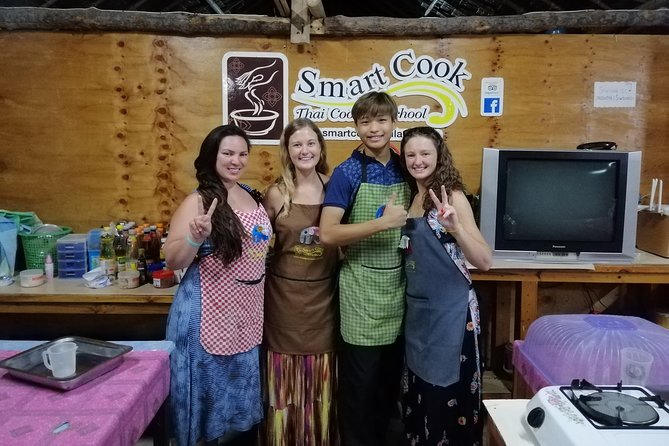
The duration is about 4 hours. In a good Thai cooking class, that time shouldn’t vanish into lectures. Here, the structure is built around active cooking.
You start with an orientation to Thai ingredients—especially how herbs, vegetables, and spices show up in real dishes. Then you move into the work: everyone has an individual cooking station and a wok, so you’re not waiting for your turn or standing behind someone else’s shoulders.
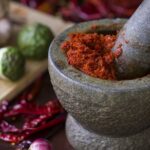
A standout element is the curry paste lesson. You’ll make curry paste from scratch with a mortar and pestle. That step sounds basic, but it changes everything. Instead of a bottled paste, you control the texture and aromatics you’re building. It’s also the moment where Thai cooking starts to feel repeatable at home.
By the time you’re cooking dishes beyond the paste—salads, noodles, soups, mains, and rice—you’ll understand the logic of the flavors instead of just collecting recipes.
Your menu choices: Daily set, Special A/B, and the Dinner set
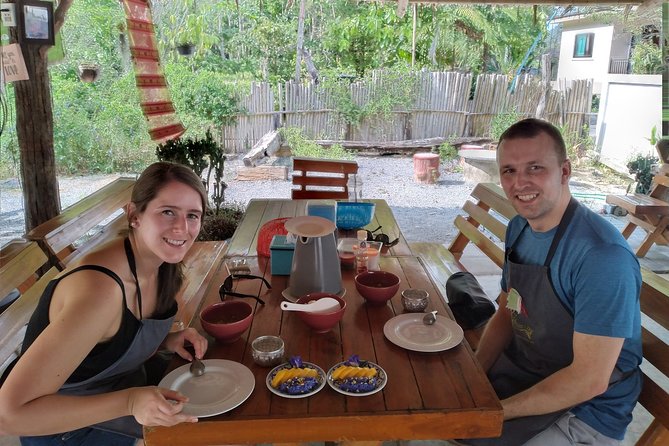
You learn five different dishes, and you’ll usually choose from sets offered that day. The school lists several menu patterns, and they’re not just random variety. Each set includes a mix that teaches different Thai flavor techniques: sour, spicy, aromatic soups; savory salads; stir-fried noodles; curry; and rice-based comfort foods.
Here’s what you might see in the sets:
Daily set examples
- Spring rolls
- Hot and sour prawn soup (tom yum style)
- Chicken in coconut milk
- Papaya salad
- Fried noodles
- Plus additional items in the same theme
Special Set A examples
- Fried noodles with prawn
- Steamed fish with lemon
- Chicken in pandanus leaves
- Savory beef salad
- Massaman curry paste (and more)
Special Set B examples
- Fried noodles with vegetable
- Seafood gravy
- Steamed fish with soya sauce
- Stir-fried prawns in tamarind sauce
- Seafood salad (and more)
Dinner set examples
- Fried Thai-style noodles
- Fried chicken with cashew nuts
- Hot and sour prawn soup
- Chicken in coconut milk soup
- Red curry paste (and more)
One dish is specifically called out in the class overview: rice and mango sticky rice. So if you’re dreaming about that sweet Thai finish, this is the class that targets it.



Cooks eat what they make: tasting, portions, and the mango sticky rice payoff
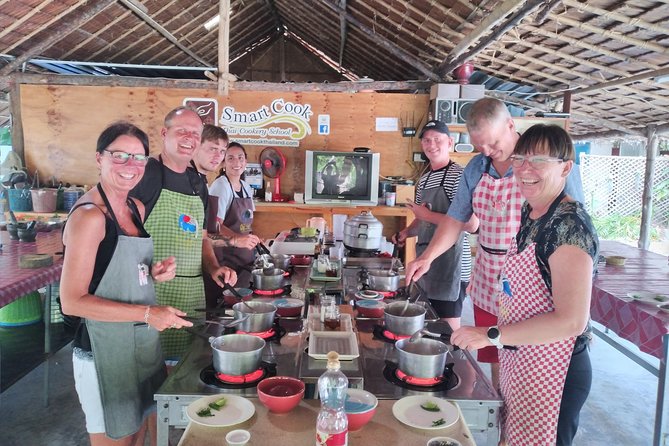
A Thai cooking class is only worth it if you get to eat your results. This one does that in a big way: after cooking, you savor what you made as your meal.
Food tasting is included, and drinking water is provided. The experience also includes fruits and preparation of spicy Thai salads, so you’re not just cooking hot dishes all the way through. You’ll get at least a taste of how Thai meals vary in flavor across the table: spicy and sour, sweet and creamy, crisp and fresh.
There’s also a practical tip that’s worth listening to: skip breakfast if you can. The tasting portion is generous, and by the time you’re seated with your meal, you’ll want your appetite ready.
And yes, mango sticky rice tends to be the emotional finish for many people. It’s not just dessert. In Thai cooking, sweet rice is a lesson in texture and balance—how the final bite should feel as much as how it should taste.
Spice control and dietary options you can actually use
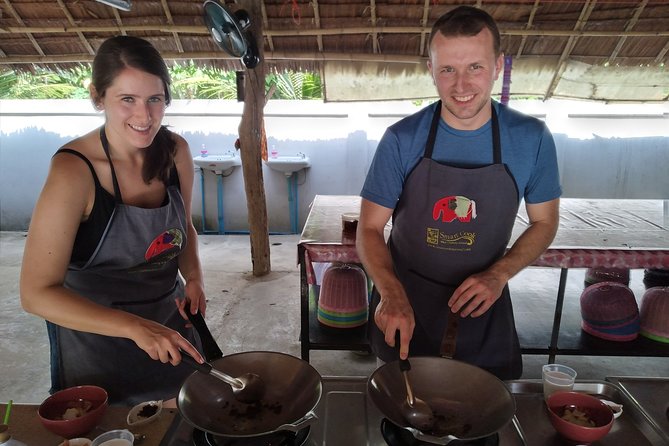
One reason I like cooking classes is that you can tailor them. You don’t have to leave Thai flavor behind if you prefer less heat or different ingredients.
This class states that the dishes can be adjusted to fit your needs:
- Vegetarian or vegan options are available
- Spice level can be set to your preference, including non-spicy
That matters because Thai food isn’t only about heat. If you control spice and choose the right substitutions, you can still get the herb and aromatics that make the flavors feel Thai rather than just “hot sauce.”
The school also includes preparation of spicy Thai salads as part of the experience. If you’re sensitive to spice, you’ll want to ask how they adjust those components so you still learn the method without suffering.
Your instructors: hands-on guidance that keeps you moving
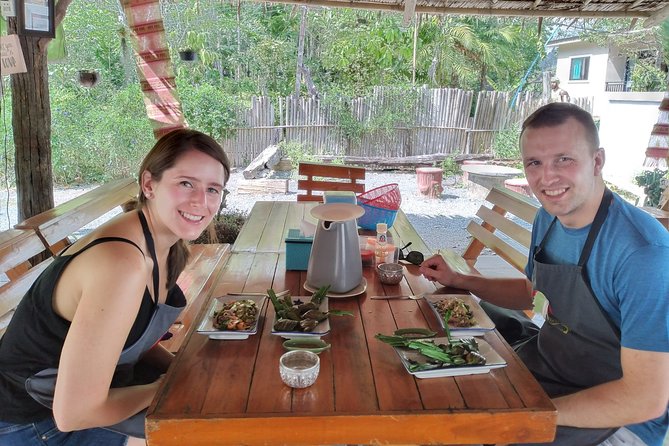
Cooking classes rise or fall on the instruction. This one leans into clear, supportive guidance and keeps it practical at your station.
The program includes friendly instructors, and the school has multiple named teaching styles popping up across the teaching team, including Pop, Chef Ann, Poppy, and Snow White. The common thread is guidance that helps you nail the steps without making you feel rushed.
What I value most in a class like this is feedback in the moment: how finely to grind, when to add ingredients, and what “done” looks like in a Thai kitchen. The small group size supports that, because the instructor has fewer people to manage at the same time.
Who this class suits best (and who might not love it)
This is a strong match if you want:
- An authentic Thai cooking base you can repeat at home
- A meal that’s included, so you’re not paying twice
- Hands-on cooking time in a small group
It also works well for food-focused couples and friends because pickup and drop-off is organized, and you’ll both be actively cooking.
If you’re the kind of traveler who hates shared planning (or you want zero uncertainty about which exact dishes appear), you might feel a little more variance than you’d like, because the school offers different sets. Still, you’re always learning five dishes, plus curry paste basics and the meal payoff.
If you’re a solo traveler, budget for the possible transfer fee depending on your hotel location. That’s the only part that can feel like an afterthought.
Things to know before you book
Here are the key details that can affect your experience day-of:
- Minimum group requirement: The class requires at least 2 people to start. If you’re booking close to the start date, that’s worth keeping in mind.
- If you don’t want to cook: Someone who comes along but doesn’t want to cook pays an extra 300 Baht per person.
- Good weather matters: The experience requires good weather. If it’s canceled due to poor weather, you’ll be offered a different date or a full refund.
- Max group size stays low: You’re not joining a huge crowd. The experience caps are described as low, including a limit of 12 for personalized attention and additional maximum limits stated in the activity details.
- What’s included: You get recipe book, certificate, tasting, fruits, drinking water, and a friendly instructor, plus transfers based on your pickup area.
If you go in expecting to cook actively—then eat what you make—you’ll get a lot out of the 4 hours.
Should you book Smart Cook Thai Cookery School in Ao Nang?
I’d book this if you want an efficient way to learn real Thai technique, not just collect photos. The value is strongest when you get pickup from Ao Nang or nearby areas, and when you’re excited to grind curry paste, cook five dishes, and eat them right after.
Skip it (or rethink transfers) if you’re traveling solo from Krabi Town/Klong Muang or Tub Kaek and the extra fee would bother you. Also consider your schedule if you’re very weather-dependent, since the class requires good weather.
If you want a hands-on cooking session where you leave with a recipe book you can actually use, this class is built for that. You’ll come away with a clearer sense of how Thai flavors are constructed—and a meal that proves it.
FAQ
How long is the cooking class?
The class is about 4 hours.
How much does it cost?
The price is $43.87 per person.
Is pickup from hotels included?
Pickup and drop-off are included for Ao Nang and certain nearby areas listed for transfers, with a minimum traveler requirement.
What if I’m a solo traveler?
For a single traveler, transfer fees apply depending on pickup area: 500 THB per person from Krabi Town or Khlong Muang, and 600 THB per person from Tub Kaek.
How many dishes will I cook?
You’ll learn to cook five different dishes.
Does the class include curry paste from scratch?
Yes. You make curry paste from scratch using a mortar and pestle.
Are vegetarian, vegan, or mild-spice options available?
Yes. The dishes can be adjusted to be vegetarian or vegan, and spicy or non-spicy to suit your preferences.
Do I get a recipe book and certificate?
Yes. You receive a free recipe book and a completion certificate.
What if the weather is poor?
The experience requires good weather. If it’s canceled due to poor weather, you’ll be offered a different date or a full refund.