REVIEW · KRABI
Aonang Thai Cookery School in Krabi
Book on Viator →Operated by Oh-Hoo · Bookable on Viator
Cooking Thai food in Ao Nang feels personal. At this small-group Thai cooking class, you cook at your own station in an open-air setup, then eat what you make. I love the hands-on rhythm of chopping, stirring, and tasting in real time, and I also like the Ao Nang hotel pickup/drop-off that keeps the morning (or afternoon/evening) simple.
One thing to keep in mind: pickup is free only for the Ao Nang area, and an extra round-trip transfer fee applies for places like Krabi Town, Klong Muang, and Tub Kaek.
In This Review
- Key things that make this class worth your time
- Ao Nang Thai Cookery School: a smart half-day plan in Krabi
- The open-air kitchen setup: where the learning actually happens
- What you cook: five dishes, chosen from a big menu
- How to choose your five dishes (quick strategy)
- A look at the hands-on flow, from ingredients to flavor balance
- Pricing and value: what $49.84 buys you in Krabi
- Transfers and timing: keeping the day easy
- Who should book this class (and who might skip it)
- What you take home: certificate, recipe book, and repeatable skills
- Should you book Aonang Thai Cookery School?
- FAQ
- How long is the cooking class?
- Does the class include hotel pickup and drop-off?
- How many dishes will I cook?
- What is the group size?
- Can I choose vegetarian or vegan options and control spice level?
- What do I receive at the end?
Key things that make this class worth your time
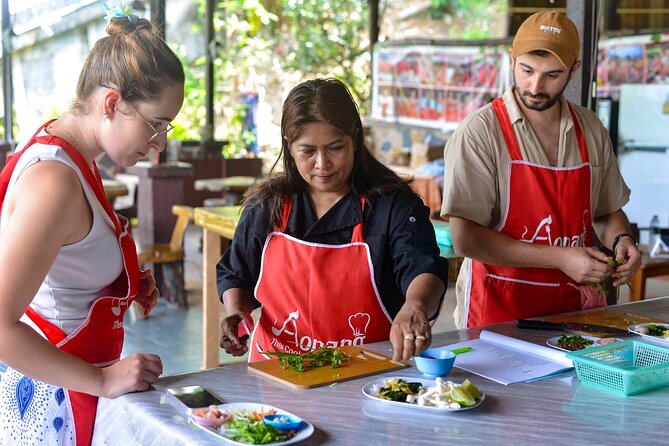
- Five-dish payoff: you don’t just watch. You plan, cook, and eat what you make.
- Open-air kitchen with individual stations: everyone gets a wok and space to work.
- Flexible choices for dietary needs and heat levels: vegetarian, vegan, spicy, or mild is possible.
- Fresh-market ingredients and natural cooking: no artificial coloring or flavoring in the kitchen.
- You leave with a certificate and recipe book: so you can recreate the dishes at home.
Ao Nang Thai Cookery School: a smart half-day plan in Krabi
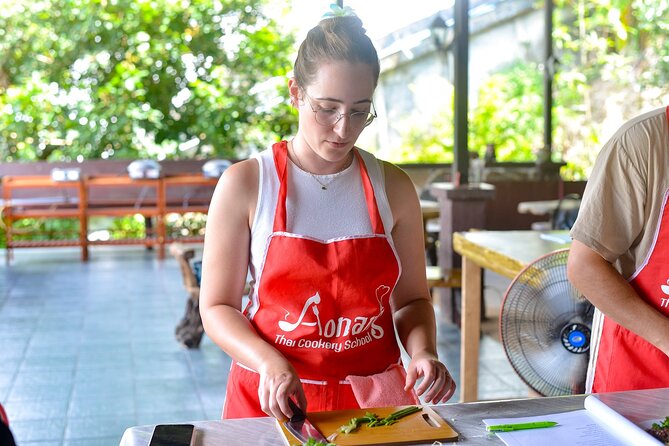
If you’re in Krabi and want more than beach time, this cooking class is an easy win. It’s a focused 4-hour experience that fits into a busy itinerary, and it’s designed so you’re actively cooking instead of sitting through a lecture. The timing options (morning, afternoon, and evening) are helpful too. You can match it to your beach plans or the heat of the day.
What I like most is how the class is built around practical learning. Thai food is a balance game: sour, salty, sweet, spicy, and aromatic herbs. In this setting, you handle the ingredients, learn what each one does, and then taste the result. That makes it much easier to repeat later when you don’t have the instructor standing over your shoulder.
Also, this isn’t a huge crowd experience. The class is kept small, with a stated maximum of 12 people in the course, and the activity caps at 15 travelers overall. That matters. When there are fewer people, you get quicker help, more time at your station, and less waiting for attention.
You can also read our reviews of more tours and experiences in Krabi.


The open-air kitchen setup: where the learning actually happens
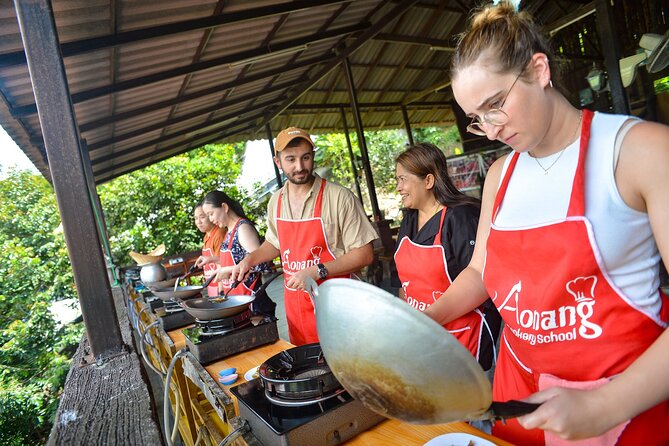
The core of the experience is the kitchen itself. You cook in an open-air environment, and each student gets their own cooking station and wok. That “own station” part sounds basic, but it’s a big deal for Thai cooking. You’re working with wet pastes, herbs, and fast stir-frying. If you’re sharing space, it gets stressful. Here, you can move at your own pace.
The school also emphasizes ingredient prep and the basics: chopping technique, how to handle common Thai flavors (like garlic, chili, lemongrass, galangal, and coriander-type herbs), and how spices behave when heated. The kitchen uses fresh produce and natural ingredients, and it specifically notes no artificial coloring or flavoring. That gives the class a more authentic base, and it also helps you understand flavor without shortcuts.
Another plus is the way instruction flows from board to plate. You’re guided through the process—from chopping and seasoning steps to plating—so you see how each decision affects the final taste. In one family-friendly experience, the instructor named Puent was praised for being clear and supportive when kids hit the tricky moments. That’s exactly what you want in a hands-on class: someone who can explain simply and help you fix things as you go.
What you cook: five dishes, chosen from a big menu
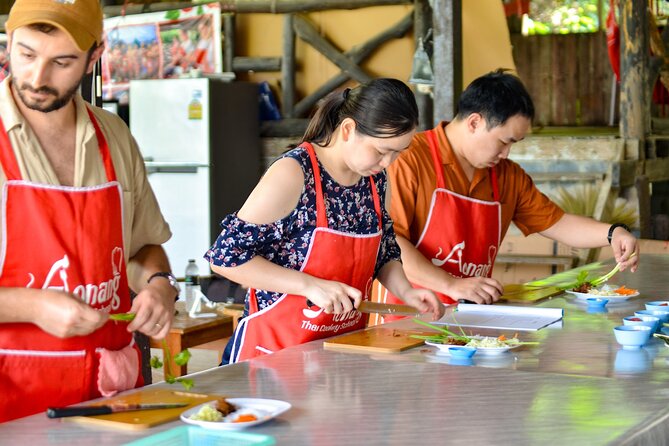
This class is built around making five different Thai dishes that you’ll enjoy afterward. The menu choices cover a lot of Thai favorites, and the key is that you can adjust for your preferences. The information you’re given says all dishes can be made vegetarian or vegan, and you can choose your heat level (spicy or non-spicy).
You also have flexibility in what you pick. The available options include:
- Soups: hot & spicy prawn soup, chicken in coconut milk soup, and a hot and creamy soup
- Stir-fries: Thai-style fried noodles (pad thai), chicken with cashew nuts, and holy basil with chicken
- Appetizers: spring rolls, fresh spring rolls, and golden bag
- Salads: papaya salad, glass noodle salad, and larb kai (chicken salad)
- Curry options: massaman, green, red, and panang (and curry paste options like massaman curry paste, green curry paste, red curry paste, and panaeng curry paste)
- Desserts: sticky rice with mango, deep-fried banana, banana in coconut milk, and banana with sticky rice
One added detail from a past experience: the class can include other recipe choices beyond the listed categories. For example, someone learned classic veggie tempura during their session. So even if you don’t see every dish spelled out in one place, you may still find options that fit your cravings.
How to choose your five dishes (quick strategy)
If you want the best mix of flavors, I suggest thinking in categories:
- Pick one soup or curry so you learn Thai flavor depth (and coconut/chili balancing, if coconut-based).
- Add one stir-fry or noodles for technique and speed (Thai cooking is often fast and hot).
- Choose one salad if you like the bright, sharp Thai balance.
- Grab one appetizer or one dessert if you want the full Thai meal arc.
That approach also helps you remember the steps later. You’ll leave with a set of repeatable templates: how to build a curry flavor base, how to season a noodle dish, how to assemble a fresh salad.
A look at the hands-on flow, from ingredients to flavor balance
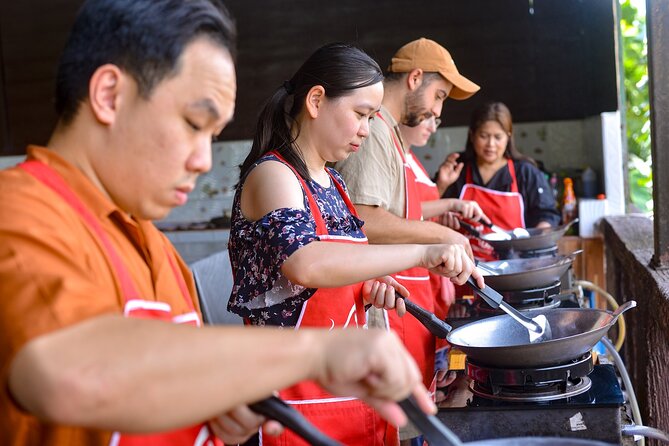
Even though the exact dishes vary based on your choices, the learning structure stays consistent. You start with prepping ingredients in the open-air kitchen, then move into cooking in stages. The goal is to help you understand what you’re doing and why it matters—not just what order to follow.
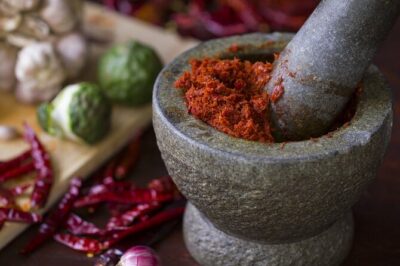
In Thai cooking, herbs and spices aren’t “background.” They’re the message. This class teaches you about the herbs, vegetables, and spices used in Thai food and shows how easy it can be when you know the basics. That includes practical lessons like:
- what aromatics do when heated
- how to handle spicy ingredients without overdoing them
- how to balance salty, sweet, and sour elements
- why fresh herbs change the whole dish
Because you’re cooking at your own station, you can see the effect immediately. Stir, taste, adjust. That feedback loop is one of the main reasons cooking classes beat food tours for long-term learning.
And you’ll get to eat what you make afterward. That tasting isn’t a formality. It’s where you confirm which flavors worked, what you might want to tweak next time, and how Thai food should feel on your tongue.


Pricing and value: what $49.84 buys you in Krabi
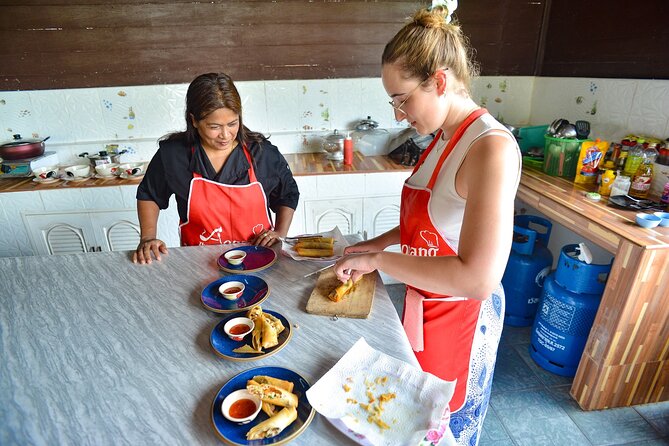
At about $49.84 per person for roughly 4 hours, this class lands in the “good value” zone—especially because it includes more than just instruction. The package includes:
- free pick up/drop off at your hotel in the Ao Nang area
- food tasting plus drinking water
- a friendly Thai cooking instructor
- a recipe book and certificate for each course
That’s a lot for one half-day. You’re not paying for a guided food tour that ends with you leaving hungry. You’re paying for a meal you cook yourself, plus the knowledge to rebuild it later.
Two value notes from a practical standpoint:
- Small group + own station: fewer people means more cooking time and less waiting.
- Take-home recipe book: even if you only cook one dish at home, the book can be the difference between a vague memory and a real kitchen win.
If you’re not staying in the Ao Nang area, check the transfer situation. The class states a 200 THB per person extra charge for round-trip transfers for locations like Krabi Town, Klong Muang, and Tub Kaek (minimum 2 people). That can still be reasonable, but it changes the value math.
Transfers and timing: keeping the day easy
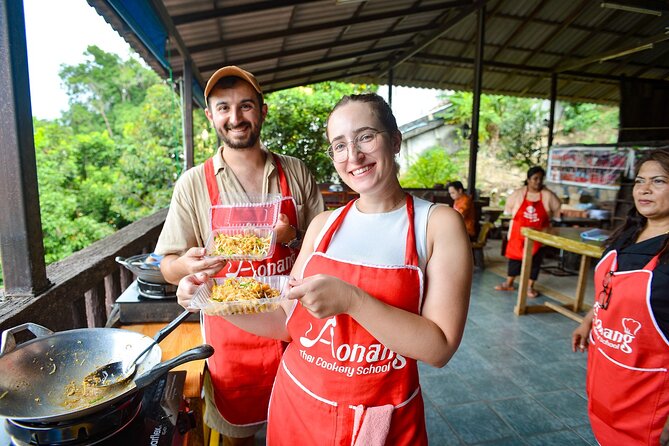
This experience starts and ends at the cookery school location in Ao Nang (400 Tambon Ao Nang…). If you’re staying in Ao Nang, pickup and drop-off are included. If you’re outside Ao Nang, you’ll need to think about that transfer fee.
Timing matters in Krabi. Depending on when you choose your slot (morning, afternoon, or evening), the class will help you beat the heat or plan around it. It’s also stated that this activity needs good weather. If weather becomes an issue, you’ll be offered a different date or a full refund. Since the kitchen is open-air, that weather condition makes sense.
There’s also a mobile ticket, and you should receive confirmation at booking. The location is near public transportation too, which is useful if you want flexibility.
Who should book this class (and who might skip it)
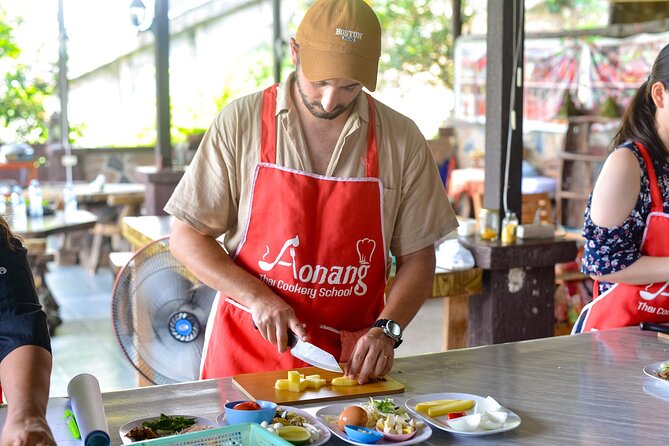
This is a strong fit if you:
- want a hands-on Thai cooking experience in Krabi
- prefer small groups and individualized help
- like the idea of learning spice/herb basics instead of memorizing recipes
- want a structured activity that still feels fun and casual
It’s also a good choice if you’re traveling with kids or family. One family shared that the class worked well with children aged 11 and 9, and that the instructor’s guidance helped with the trickier steps.
You might hesitate if:
- you’re trying to pack in too many activities back-to-back (you’ll want a little recovery time afterward)
- you’re far from Ao Nang and the transfer fee affects your budget
- you’re traveling on a day where you can’t be flexible if weather forces a date change
What you take home: certificate, recipe book, and repeatable skills
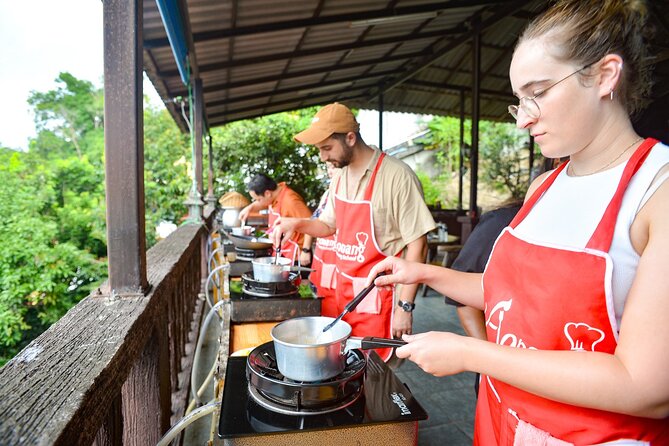
Food tours can give you inspiration. Cooking classes can give you control. Here, you’re given both a certificate of completion and a free recipe book. That’s not just a souvenir move. A recipe book helps you rebuild flavors when the memory fades, and it gives you a starting point for real cooking at home.
If you’re the type who likes experimenting, this style of class is especially useful. You learn how herbs and spices work together, so you can make substitutions later without completely losing the Thai flavor profile.
It also helps that the class can be adapted for different dietary needs and spice preferences. That means you’re not stuck cooking a rigid version of Thai food. You can tailor it to your taste, which makes the take-home value stronger.
Should you book Aonang Thai Cookery School?
I’d book it if you want a practical Krabi activity that actually teaches you Thai cooking, not just feeds you. The small group, open-air station setup, and the fact that you make five dishes (with options for vegetarian/vegan and spice levels) make it a solid value for a half-day plan. Add in hotel pickup within Ao Nang, plus the recipe book and certificate, and it’s easier to justify than a normal meal.
Before you book, do two quick checks:
- Confirm you’re in the Ao Nang pickup zone, or budget for the transfer fee if you’re coming from Krabi Town/Klong Muang/Tub Kaek.
- Pick the time slot that fits your weather comfort and daily schedule, since the class depends on good conditions.
FAQ
How long is the cooking class?
The class lasts about 4 hours.
Does the class include hotel pickup and drop-off?
Yes, there is free pick up/drop off at your hotel in the Ao Nang area. There is an extra charge for roundtrip transfers for Krabi Town, Klong Muang, and Tub Kaek.
How many dishes will I cook?
You will prepare five different Thai dishes and then enjoy what you cook.
What is the group size?
The course size is limited to a maximum of 12 people, and the activity has a maximum of 15 travelers.
Can I choose vegetarian or vegan options and control spice level?
Yes. Dishes can be vegetarian or vegan, and they can be made spicy or non-spicy to suit your preference.
What do I receive at the end?
You receive a free recipe book and a certificate of completion, plus food tasting and drinking water are included.